

How to Write Psychotherapy Notes That Stay Useful Months Later
If you’re searching how to write psychotherapy notes, you probably want a simple, repeatable way to document sessions so the note still makes sense weeks or months later (not just on the day you wrote it). In this guide, “psychotherapy notes” also covers common terms like process notes, therapy process notes, private notes, therapist process notes, and clinical reflection notes (wording varies by region and setting).
If you prefer to start with copy-ready examples you can adapt immediately, here are copy-ready psychotherapy note examples.
Disclaimer: Educational information only. Follow local laws, licensing requirements, payer requirements, and your clinic policy. This is not legal advice.
Why notes that feel fine today fail you later
Psychotherapy notes usually fail later for one of two reasons:
- They’re too vague. They capture that “a lot happened,” but not the clinical meaning of what happened.
- They’re too long. They include a play-by-play, but not the decisions and clinical reasoning you’ll need later.
What “useful months later” actually means
A psychotherapy note is “useful months later” if, in 60 seconds, you can quickly understand:
- Context: why this session mattered at the time
- Clinical reasoning: what you were tracking and why you chose that focus
- Decisions: what you decided, what happens next, and what to monitor
- Continuity: how it connects to goals and what progress signals you’re watching
This “60-second reread” standard is a practical quality bar for therapy note taking best practices.
Psychotherapy notes vs progress notes (quick boundary guide)
In plain language:
- Psychotherapy notes (process notes / private clinical reflection notes): your private reflections about the therapy process, working hypotheses, and in-the-room dynamics.
- Progress notes: the official clinical record of services provided, interventions, response, risk documentation, and plan (often written in formats like SOAP, DAP, or BIRP).
A practical boundary that helps in day-to-day documentation:
- If it’s needed for care coordination, continuity, risk documentation, or service record, it belongs in a progress note.
- If it’s primarily your private clinical reflection (and not required for the official record), it’s a better fit for psychotherapy notes.
If you want the adjacent progress note formats, see progress note formats and examples (SOAP, DAP, BIRP).
Quick comparison table
| Topic | Psychotherapy notes (process notes) | Progress notes (clinical record) |
|---|---|---|
| Main purpose | Private clinical reflection to support your thinking | Document care provided and continuity |
| Style | Reflective, hypothesis-driven | Objective, structured, service-focused |
| Typical content | Patterns, process, hypotheses, therapist reminders | Interventions, response, risk, plan |
| Sharing/use | Often kept separate from routine record sharing | Used for coordination (and sometimes billing) |
| Best practice | Short, clear, minimal identifiers | Complete enough for continuity and policy needs |
Are psychotherapy notes part of the medical record (and who can access them)?
This is the question many therapists are really asking when they search “psychotherapy notes vs progress notes,” “process notes vs progress notes,” or “can clients request psychotherapy notes.”
At a high level (and without legal advice):
- In many settings, psychotherapy notes are treated differently from the general clinical record and are often kept separate from progress notes.
- Progress notes are generally the place for the official record of care: what you did, how the client responded, risk status, and what happens next.
- Client access, insurer access, and what can be disclosed can depend on jurisdiction, payer rules, your documentation system, and your clinic policy.
A practical way to reduce confusion is to assume:
- Progress note = record continuity
- Psychotherapy note = private process reflection
If you work in a setting where access requests are common, it’s usually safest to keep psychotherapy notes brief, professional, and clearly separated, and rely on progress notes for the record of care.
Disclaimer reminder: documentation rules vary widely, so check local requirements and your organization’s policy.
How to write psychotherapy notes using the 5-part note that ages well (use this every session)
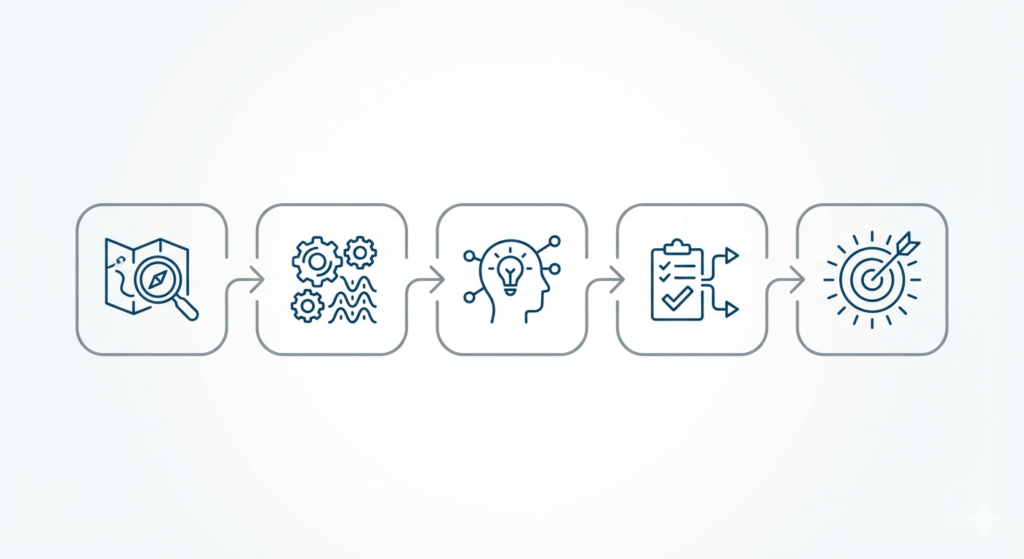
If you want a repeatable answer to how to write psychotherapy notes, use this structure every session. It’s designed to be short, consistent, and readable months later.
In practice: write one line of context, one short theme, two to four lines of reasoning, a few bullets for what you decided, and one line linking it to goals.
- Context in one line
- Pattern or theme
- Clinical reasoning
- Decision and plan
- Thread to goals/outcomes
The 5-part framework (copy and reuse)
- Context in one line (why this session mattered today)
- Pattern or theme (what is repeating, shifting, or newly visible)
- Clinical reasoning (why you chose the intervention or focus)
- Decision and plan (what you decided, what happens next, what to monitor)
- Thread to goals/outcomes (how it maps to the treatment plan and progress signals)
Important clarification: If you’re writing the official clinical record (SOAP/DAP/BIRP, service details, risk documentation, formal interventions), use your progress note format instead.
Psychotherapy notes template (fillable)
Use this psychotherapy notes template as a reusable starting point:
- Context (1 line)
- Pattern/theme (2–4 lines)
- Clinical reasoning (2–4 lines)
- Decision + plan (bullets)
- Thread to goals/outcomes (1–2 lines)
Callout: Keep these out of psychotherapy notes (to avoid drift into progress-note territory)
- Service/billing details (time, modality billing language, attendance details beyond what you need)
- Diagnosis summaries and formal treatment plan copy-paste
- Full intervention lists (save those for progress notes)
- Long narrative replay of session content (aim for meaning, not transcript)
- Anything you wouldn’t want to reread months later without context
For keeping notes aligned to goals (so “months later” clarity is concrete), see treatment plan templates and outcomes tracking.
How to write less, but capture more (carry-forward technique)
A major reason notes get long is that therapists rewrite stable facts every week. A carry-forward method solves that and supports a cleaner therapy documentation workflow.
Step 1: Create a stable “case snapshot” (update only when it changes)
Store this once (or in a dedicated section you update occasionally):
- Presenting concerns (brief)
- Working formulation (2–4 lines)
- Baseline risk and protective factors (brief, as clinically appropriate)
- Current treatment goals and target outcomes
- Current approach (for example CBT focus, relational focus, skills work)
Step 2: In each psychotherapy note, write only what changed
Your session note becomes an “update layer”:
- What pattern shifted or newly appeared
- What hypothesis gained support or weakened
- What you decided to focus on next
- What progress signal you’re watching
Step 3: Use intake to reduce repetition
Clean intake data is the upstream source for stable facts. If intake is inconsistent, you end up rewriting basics. For practical structures, see therapy intake form templates and best practices.
Step 4: Add lightweight progress signals
You don’t need a complex system. One signal can be enough:
- Fewer panic episodes/week
- Increased tolerance of affect (stays with emotion longer before avoiding)
- One direct needs statement attempted/week
If you want to connect progress signals to measurement without bloating notes, see measurement based care practical guide.
Example: same session, two versions (day-of vs months-later)
Below is the same fictional session documented two ways. No real client data.
Version 1: “Same day” note (common, but not durable)
- Talked about conflict with partner.
- Did CBT reframing.
- Client seemed calmer.
- Plan: continue next week.
Why this fails months later:
- No context for why it mattered, no pattern, no rationale, no clear decision, no link to goals.
Version 2: “Months later” note (using the 5-part framework)
Context (1 line):
Session mattered because conflict activated the client’s shame-avoidance cycle and increased withdrawal behaviors this week.
Pattern/theme (2–4 lines):
Client repeated “I’m too much” narrative when naming needs in the relationship. When needs surfaced, client shifted into problem-solving and minimized affect. Notable increase in affect tolerance after slowing pace and reflecting the shift into minimizing.
Clinical reasoning (2–4 lines):
Chose to focus less on partner-content details and more on the shame/needs cycle because it appears to maintain avoidance and relationship strain. Used a brief cognitive intervention (identify automatic thought) paired with process reflection (notice the minimizing move) to support emotion labeling and tolerance.
Decision + plan (bullets):
- Decision: prioritize needs expression and shame response as the next phase focus.
- Next session: map the cycle (trigger → thought → emotion → safety behavior → consequence).
- Monitor: withdrawing/over-explaining after conflict.
- Between sessions: practice one low-stakes needs statement and note outcome (brief, not a full narrative).
Thread to goals/outcomes (1–2 lines):
Aligns with goal of increasing assertive communication and reducing avoidance; progress signal is one direct needs statement attempted and reduced post-conflict rumination.writing one from scratch), use Psychotherapy Notes Sample.
A 60-second reread checklist (for future-you)
When you reread the note later, you should be able to answer these quickly:
- What was the clinical point of this session?
- What pattern was repeating, shifting, or newly visible?
- What did I think was happening (working formulation), and what did I notice that supports it?
- What did I decide to focus on next (and what did I deprioritize)?
- What happens next session, and what am I monitoring?
- How does this connect to goals or progress signals?
If you can’t answer at least 4 of these, the note is likely too vague or missing decisions.
Common mistakes and quick fixes
Mistake 1: Too vague
Example: “Explored emotions.”
Quick fix: Name the pattern and the shift.
- “Client moved from intellectualization to sadness when slowed down; avoided sadness by switching topics.”
Mistake 2: Too long
Example: transcript-like recap.
Quick fix: Replace narrative with clinical meaning.
- Use the 5-part framework and keep each part short.
Mistake 3: Missing decisions
Example: you describe what happened but not what you chose.
Quick fix: Add one line.
- “Decision: focus on X next session; deprioritize Y for now.”
Mistake 4: Missing plan
Example: no next step, no monitoring target.
Quick fix: add 2–4 bullets under “Decision + plan.”
Mistake 5: Mixing private reflections into the wrong place
Example: detailed process reflections drift into the official record.
Quick fix: keep psychotherapy notes brief and separate, and rely on progress notes for the record of care.
Mistake 6: Notes drift away from goals
Quick fix: add a single “Thread to goals/outcomes” line.
Use treatment plan templates and outcomes tracking to keep goal language consistent.
Mistake 7: Between-session data bloats the note
Quick fix: summarize in one line and keep only what changes the plan. If worksheets are part of your workflow, they can inform the next note without becoming a long attachment. See therapy worksheets guide.
If clients track progress at home (apps, check-ins, brief reflections), treat it as a signal, not a transcript. Tracking progress beyond the session has practical options.
FAQ
Templates and next steps
If you want the quickest path from reading to action, use the cornerstone resource and adapt a copy-ready example:
Want a cleaner therapy documentation workflow without starting from a blank page?
Emosapien can help clinicians create structured documentation and reduce admin time by using consistent templates, while you stay in control of clinical judgment and final edits.
- Draft structured notes faster (you review and finalize)
- Keep documentation consistent across sessions and clinicians
- Use built-in resources for progress notes, treatment plans, intake forms, measurement based care, and therapy worksheets
Next step: Try Emosapien as an optional workflow upgrade, and compare your current process to a structured template approach.
Doing due diligence? Review our Trust & security overview and Privacy policy before adopting any tool.
References
- U.S. Department of Health & Human Services (HHS), HIPAA Privacy Rule: definition and handling of “psychotherapy notes” (45 CFR 164.501)
- Professional recordkeeping guidance from relevant licensing boards and professional associations (use your jurisdiction and discipline’s guidance as primary)