

Psychotherapy Notes Sample: Examples and a 5-Part Method

Outline
Authored by Dr. Sofia Reyes, clinical psychologist with a forensic and healthcare-compliance specialty and over a decade of practice across the US and Canada.
You finish a session with two different writing jobs. The progress note must show the care another clinician may need to continue. Your private note may hold the process pattern, tentative hypothesis, and response in the room that you want to reconsider later. This psychotherapy notes sample shows both the useful level of reflection and the boundary that keeps it out of the shared chart.
Educational information for licensed US therapists and mental-health clinicians. It is not legal, billing, or payer advice. Federal law provides a baseline, while state law, employment policy, record systems, and professional rules may impose different or additional requirements.
What psychotherapy notes are
Under the HIPAA Privacy Rule at 45 CFR 164.501, psychotherapy notes are notes recorded in any medium by a health care provider who is a mental health professional documenting or analyzing the contents of conversation during a private counseling session or a group, joint, or family counseling session and that are separated from the rest of the individual’s medical record. The definition excludes medication prescription and monitoring, counseling session start and stop times, the modalities and frequencies of treatment furnished, results of clinical tests, and any summary of diagnosis, functional status, the treatment plan, symptoms, prognosis, and progress to date.
That definition creates a practical workflow boundary:
- Private psychotherapy note: process observations, tentative formulation, relational dynamics, countertransference as a clinical process, and questions you want to revisit.
- Progress note in the clinical record: service details, intervention, client response, risk when relevant, progress against goals, and the formal plan.
When the hour is conjoint couples therapy, the official two-client chart is the couples therapy progress note template; keep cycle hypotheses and countertransference in the private note.
A file labeled “private” does not automatically meet the definition. Content and separate maintenance both matter. The clinical documentation hub maps the wider documentation system without turning private reflections into another chart format.
Psychotherapy notes sample
The fictional example below contains no real client data. It stays focused on process and leaves the service record to a separate progress note.
The psychotherapy notes sample stays readable because it records one clinical thread rather than replaying the hour. It also avoids chart fields that belong in the progress note.
How to write psychotherapy notes with the five-part method
Use the same five prompts after each session. The order moves from observation to interpretation, then back to a decision you can test rather than a conclusion you have already proved.
- Context: Name what brought this process thread into focus. Do not recreate the service header.
- Pattern: Capture what repeated, shifted, or became visible in the therapeutic relationship.
- Reasoning: State your working hypothesis and the observations that support or weaken it.
- Decision: Record what you chose to explore, pause, or reconsider in your own clinical thinking.
- Thread to goals: Note the possible connection without copying the treatment plan or progress summary into the private note.
Scroll the visual sideways to view the full diagram
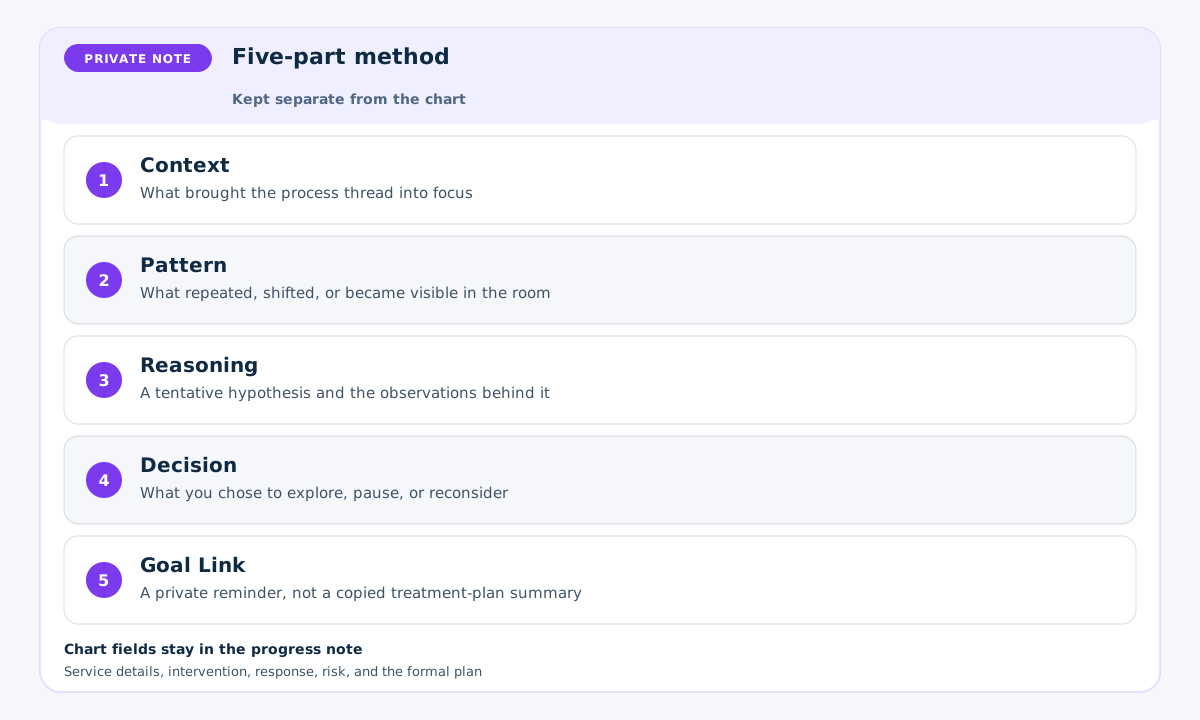
A reusable private-note skeleton
Four sample variations
These variations use the same fictional process thread. They change the level of detail or the clinical lens without claiming one format fits every modality.
Concise private note
CBT-informed reflection
Relational reflection
Durable note versus day-of note
The durable version gives future-you the pattern, evidence, uncertainty, and next question. It does not duplicate the progress note’s intervention, response, risk, or formal plan.
Psychotherapy notes vs progress notes
Use the boundary below before saving either document. The full process notes vs progress notes guide includes a two-record example and a mixed-note redline.
| Put in the private psychotherapy note | Put in the progress note |
|---|---|
| Tentative process hypothesis | Diagnosis and clinical assessment needed for the record |
| Relational pattern observed in the room | Intervention delivered and client response |
| Countertransference reflection | Risk assessment and action when relevant |
| Question to revisit in your clinical thinking | Progress against treatment goals |
| Reminder about therapist stance | Service details and formal next plan |
When one sentence contains both kinds of material, split it. “I felt pulled to rescue” may stay private. “Used grounding; client restated the steps and reported lower distress” belongs in the progress note.
What to keep out of private notes
Private does not mean unbounded. Keep out:
- a transcript or detailed replay of sensitive content that adds no clinical value;
- unnecessary names and third-party identifiers;
- judgmental labels without observable context;
- hypotheses written as settled facts;
- copied diagnosis, treatment plan, symptom, prognosis, or progress summaries;
- billing justification, session timing, modality, and other service-record fields;
- generated text that you have not reviewed and accepted.
Professional, minimal writing matters even when the note is separately maintained. Retention, access, and disclosure rules can vary, so use the policy that controls your setting rather than assuming privacy means the note can never be requested or disclosed.
A 60-second pre-save checklist
Before you close the private note, ask:
- Is this note maintained separately from the medical record?
- Did I capture one useful process thread rather than replay the session?
- Did I label interpretation as a working hypothesis?
- Did I move service details, intervention, response, risk, progress, and plan to the progress note?
- Could I understand the clinical question in 60 seconds six months from now?
- Did I remove unnecessary identifiers and sensitive detail?
If the answer to item four is no, stop and sort the material before signing either record. Run the psychotherapy notes sample through the checklist once, then reuse the five-part skeleton for later sessions.
Templates and next steps
The Note Formats Pack gives you a printable process-versus-progress boundary card and sign-off checklist. It also includes SOAP, DAP, BIRP, GIRP, PIE, and SIRP sheets for the progress note. Those format sheets belong to the clinical record side of the boundary, not the private process note.
Download the Note Formats Pack
Print the process-versus-progress boundary card, then use the format sheets only for the reviewed clinical record.
- Side-by-side selector for SOAP, DAP, BIRP, GIRP, PIE, and SIRP
- Six printable format pages with intervention, response, risk, and next-step prompts
- DAP quick-reference card and intervention-language guide
- Process-versus-progress sorting card and 60-second sign-off checklist
Free. We'll email the PDF link right away. We may also send the occasional therapist toolkit. Unsubscribe any time.
Where should we send the link?
We'll email the PDF link right away. You'll also get the occasional therapist toolkit. Unsubscribe any time.
✓ Check your inbox
We've sent you the PDF
The download link is on its way to your inbox, usually within a minute or two. The email will come from Emosapien (hello@team.emosapien.com); check your spam folder if you don't see it.
You're also on the weekly therapist toolkit list. Unsubscribe any time from the email footer.
If you need chart-note structures and worked examples, use the mental health progress note templates. If you use software to draft that record, Emosapien AI clinical notes creates a structured draft for clinician review. Keep private process judgment with the therapist, and move only the appropriate chart material into the reviewed note.
Frequently asked questions
What is the difference between psychotherapy notes and progress notes?
Psychotherapy notes are private process reflections kept separate from the medical record under the HIPAA definition. Progress notes document the service, interventions, client response, risk when relevant, progress, and plan for continuity. Local rules and clinic policy may add requirements.
Can I use this psychotherapy notes sample as written?
Use it as a structural model, not as text to paste into a real record. Replace every fictional detail with your own concise observation, remove anything unnecessary, and follow the storage and documentation policy that controls your setting.
Do psychotherapy notes need a fixed format?
HIPAA does not prescribe a five-part template. A consistent private structure can make later review faster, but it does not create protected status by itself. The content must fit the federal definition and the notes must be maintained separately from the medical record.
Should psychotherapy notes include interventions or homework?
The intervention delivered, client response, and formal next-step plan usually belong in the progress note because they support continuity and the service record. A private note may hold a brief question or hypothesis for your own reflection without duplicating the chart plan.
Can clients or health plans access psychotherapy notes?
HIPAA treats qualifying psychotherapy notes differently from the general record, including under access and authorization rules. Exceptions and other laws can apply. Keep the notes separate, follow your organization policy, and obtain qualified legal or compliance guidance for a specific request.
Are SOAP, DAP, BIRP, and GIRP psychotherapy-note formats?
No. SOAP, DAP, BIRP, and GIRP organize progress notes in the clinical record. The Note Formats Pack includes those chart-note structures plus a process-versus-progress boundary card so you can sort material before signing.
References
- U.S. Department of Health and Human Services. Does HIPAA provide extra protections for mental health information compared with other health information?
- Electronic Code of Federal Regulations. 45 CFR 164.501 Definitions
- Electronic Code of Federal Regulations. 45 CFR 164.508(a)(2) (authorization rules that can apply to qualifying psychotherapy notes; exceptions and other laws may also apply)
- Electronic Code of Federal Regulations. 45 CFR 164.524(a)(1)(i) (individual access baseline that can treat qualifying psychotherapy notes differently from much of the designated record set; other laws and exceptions may apply)
- American Psychological Association. Record Keeping Guidelines