Client Engagement Therapy
Therapy does not end when the session does. Emosapien's Engagement Agent runs the week between appointments with guided check-ins, AI-assisted journaling, modality-aligned homework, and outcome measures. Every signal feeds the next session before you walk in.
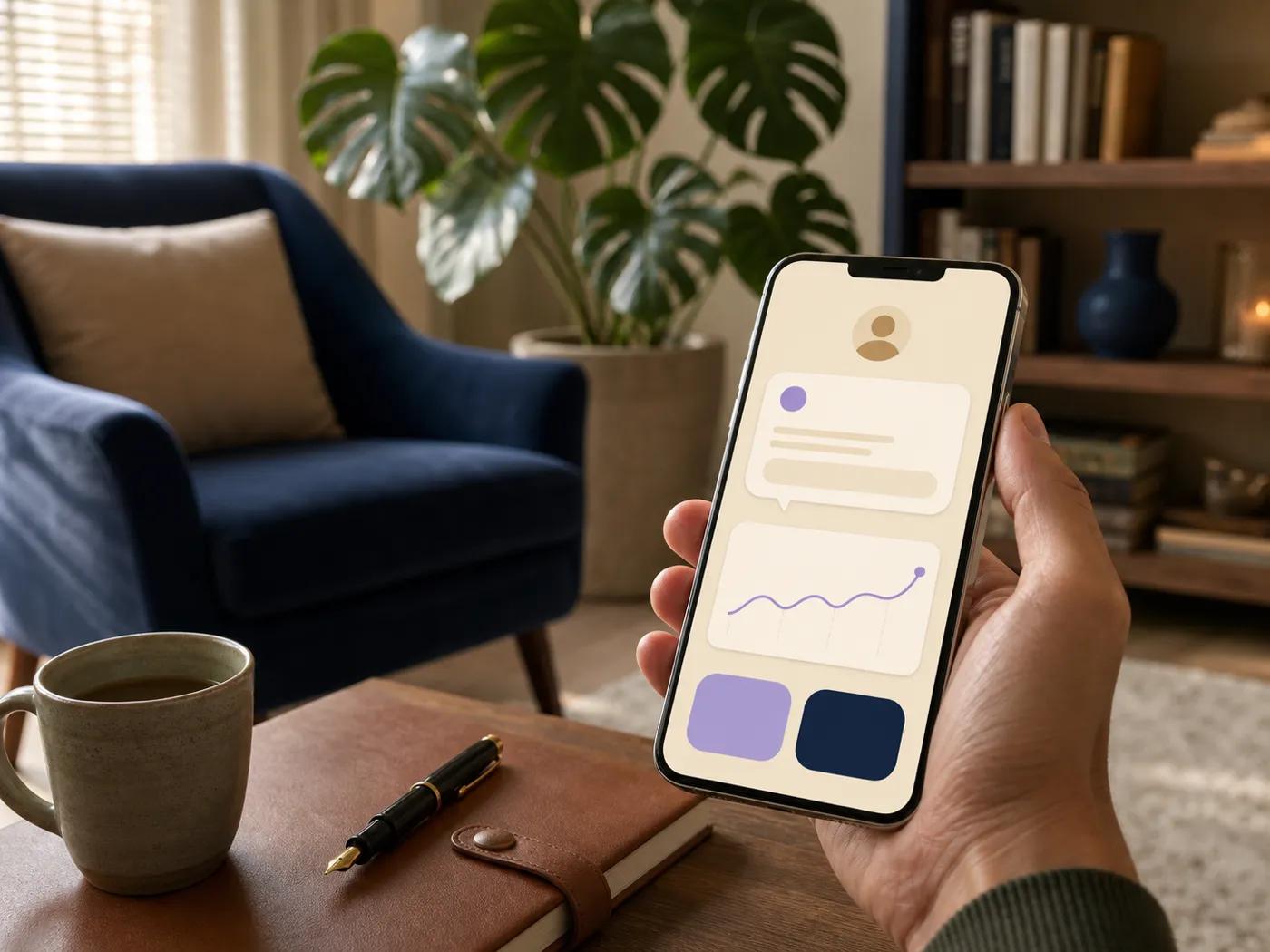
Why between-session care matters
The 167 hours between sessions are where therapy lives or stalls
A weekly client gets one hour with you and one hundred and sixty-seven without. The session is the catalyst. The week is where insight either becomes practice or fades. Therapy outcomes research has reached the same conclusion from two directions: Lambert and colleagues on routine outcome monitoring and Kazantzis et al. on therapy homework compliance. Clients who stay engaged between sessions improve faster, drop out less, and consolidate gains sooner.
The reason most practices do not run a structured engagement loop is not skepticism. It is operational. Texting clients reflective prompts, chasing homework, recording PHQ-9 scores by hand, then reviewing it all before the next appointment is a second job on top of clinical work.
The Engagement Agent does that second job in the background. You set the shape of the week once, per client, and the Agent runs it. Clients get gentle structure. You get a one-page brief before every session, written in your modality.
Start free
What the Engagement Agent runs
What between-session care looks like in practice
The Engagement Agent is not a chatbot and not a generic wellness app. It is a clinical layer that knows your modality, your treatment plan, and your caseload. Three pieces, designed to compose into a normal therapy practice rather than replace it.
Short, reflective prompts
The Engagement Agent sends gentle daily or weekly check-ins shaped by the active treatment plan. Mood ratings, sleep notes, or a single reflective question. Replies surface in your dashboard before the next session so you walk in already oriented.
A journal that listens, not just records
Clients write freely; the Engagement Agent extracts themes, tracks cognitive patterns, and surfaces a concise weekly summary you both review. Privacy stays with the client by default; shared summaries are explicit, not implicit.
Light activities, real outcome data
Assign a CBT thought record, an ACT values exercise, a DBT distress-tolerance practice, or a brief PHQ-9. Completion and scores feed back into the treatment plan, so you measure change instead of guessing at it.
How a week of engagement runs
From the close of one session to the start of the next
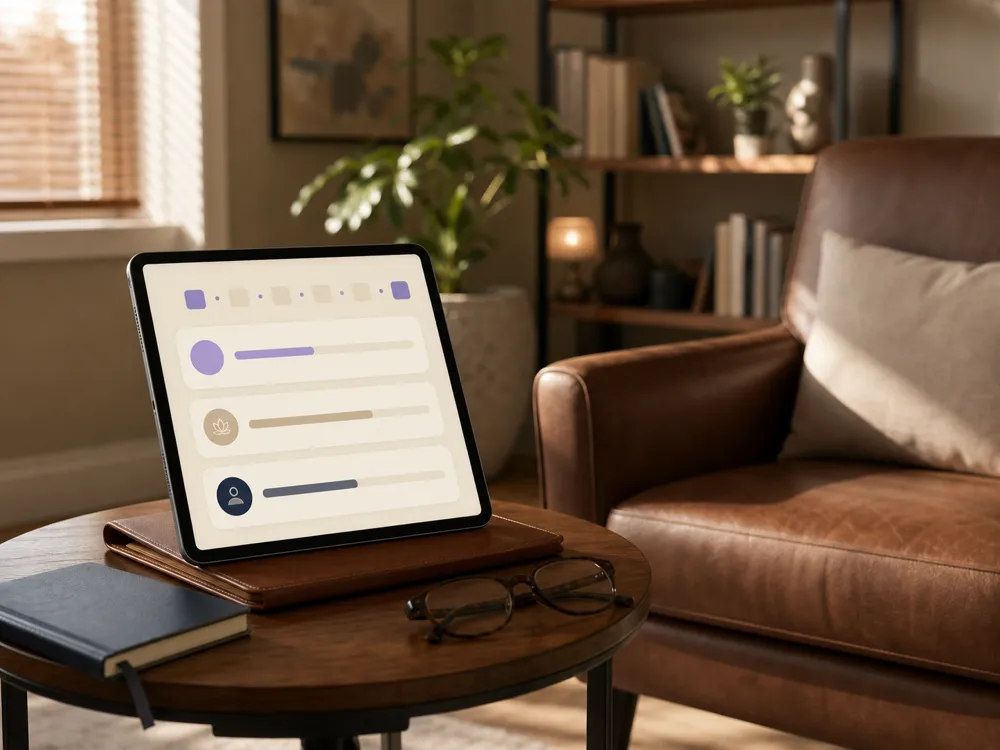
Close the session, set the bridge
At session end, the Engagement Agent proposes a brief between-session plan drawn from what just happened: a check-in cadence, a journal prompt, a single homework activity, and an outcome measure if relevant. You approve, edit, or skip in seconds.

Client engages on their own schedule
During the week, the client receives quiet prompts in the Emosapien client engagement app for iOS and Android. No clinical jargon. No daily badge anxiety. Two or three short touches across the week is the design target, not constant notifications.

You start the next session already in context
Before the next appointment, the Engagement Agent assembles a one-page brief: what the client wrote, how the measures shifted, where activities stalled, and what to ask about first. You spend the first ten minutes on the work, not on catching up.
What gets bridged between sessions
The point is not more screens in your clients' lives. The point is fewer gaps in care. Here are the four threads that most often go quiet between sessions and the form they take when the Engagement Agent is running them.
Mood and outcome scores
Schedule PHQ-9, GAD-7, ORS, or a custom scale at the cadence your plan calls for. Scores plot against treatment-plan goals so you can see drift, plateau, or progress without opening a spreadsheet.
Homework and modality activities
CBT thought records, ACT defusion exercises, DBT diary cards, exposure logs, behavioral activation tasks. Kazantzis and colleagues meta-analyzed 23 studies and found homework compliance accounted for a meaningful share of therapy outcomes, so we treat it as clinical signal, not nice-to-have. The Engagement Agent stores entries, flags incompletes, and keeps language in your modality.
Journaling reflections
Open-ended writing with optional themed prompts. The Engagement Agent groups themes by week (sleep, conflict, avoidance, values, family) and notes recurring cognitive patterns the client may not yet see.
Documentation flags for clinical review
Concerning language patterns, sudden affect shifts, or a missed safety-plan check-in surface as flags in your dashboard for your next review. The Engagement Agent is not a crisis-response tool and does not replace standard safety protocols; it makes the chart easier to read.
Endings and retention
Attendance gaps, a Continuity Review, and a discharge draft
Missed sessions since the client last attended, and a case with no next session booked, still need a record. Emosapien shows the attendance gap, records a Continuity Review, and drafts a discharge summary for review.
Notice attendance gaps
Emosapien shows missed sessions since the client last attended, and whether a next session is booked. Those facts sit on the case.
Decide and record
A Continuity Review records done for now or hold, an optional next-contact date, and a contact log. The review is a chart decision. It is not a reminder, and it does not contact the client.
Close cleanly
Emosapien drafts a discharge summary for clinician review. The free generator produces the same closing draft.
This is not an AI scribe with a notifications panel
Generic AI medical scribes (Heidi, Nuance DAX, Suki, Abridge, Freed) are built around a different problem: transcribing a clinician-patient encounter and producing a structured note. They are well-built tools for primary care and hospital workflows. They are not built for the week between sessions, because primary care does not have a week between sessions in the same way therapy does.
Therapy-native tools like Upheal and Mentalyc are stronger fits clinically, but their primary surface is also post-session: a polished progress note and a session summary. Blueprint covers outcome measurement well. None of them run the continuous-care surface this work needs.
Emosapien is structured around the Engagement Agent as a first-class pillar, not an add-on. The Scribe Agent writes the note. The Engagement Agent runs the week. The Planning Agent keeps the treatment plan coherent across both. Three roles, one practice.
Deeper reading
The clinical thinking behind the Engagement Agent
Continuous between-session care is not a marketing slogan. It is the way our team writes about the week between appointments and outcome tracking. Pick whichever angle is most useful for your practice.
- Between-session therapy check-ins
From isolated sessions to continuous care, with two prompt libraries.
- Between-session therapy activities
Practical CBT, ACT, and DBT activities and why clients resist them.
- Journaling meets AI
Therapeutic progress tracking that keeps privacy and adds structure.
- Measurement-based care: a practical guide
Choose measures, set cadence, and use scores in real sessions.
Comparing platforms rather than care models? Read our best AI patient engagement software for therapists roundup.
Privacy and compliance
Client engagement that respects the therapeutic frame
The Engagement Agent is built on the same compliance posture as the rest of Emosapien: HIPAA-aligned, SOC 2 Type II audited, ISO 27001 certified. Client journals stay client-owned by default. Outcome scores and homework completion are shared by design, because those are the clinical signals you need to act on. Anything else is opt-in.
See full security posture- ✓ End-to-end encryption (AES-256, TLS 1.3)
- ✓ SOC 2 Type II audited annually
- ✓ Client-owned journals by default
- ✓ Explicit, granular sharing consent
- ✓ No model training on client data
- ✓ BAA available on Professional and Enterprise

It’s like having an assistant that helps me keep track of each client’s needs in real time. I see what shifted during the week before they sit down, so we go straight to the work.
The full workflow
Want to see how the Engagement Agent slots into the rest of the session loop, from consent and capture through signed note? See the step-by-step walk-through of how Emosapien works.
Frequently asked questions
Client engagement therapy is the practice of extending therapeutic work into the days between sessions through structured check-ins, guided journaling, and outcome measurement. The goal is continuity: the client does not drop the work the moment they leave the room, and the therapist does not have to reconstruct the week at the start of every appointment. Emosapien's Engagement Agent makes continuous between-session care practical to run at caseload scale instead of relying on ad hoc emails and texts.
A medical scribe writes the note after a session ends. Generic medical scribes (Heidi, Nuance DAX, Suki, Abridge, Freed) are good at that for primary-care and hospital workflows. Between-session engagement is the opposite half of the job: what happens during the week, not what gets written up afterward. Emosapien covers both, with the Scribe Agent drafting notes (try the free AI progress note generator if you want a no-account taste) and the Engagement Agent running continuity. They share the treatment plan so they reinforce each other.
No. The design target is two or three quiet touches a week, not daily streak mechanics. The Engagement Agent uses the modality and presenting issue to shape cadence. A client in CBT for generalized anxiety gets a different rhythm than a client in DBT skills work or a client in supportive psychotherapy after a loss. You can also pause engagement entirely for a client at any time.
Yes, by default. Free-form journal entries stay with the client. The Engagement Agent produces a weekly summary, and the client decides what to share with you. Mood scores, completed homework, and outcome measures are shared by design (those are the data points you need to clinically). Anything more personal requires explicit opt-in. This split matches how most therapists already use journaling clinically.
Yes. It is platform-agnostic and integrates with the major video tools (Zoom, Google Meet, and dedicated telehealth platforms) through the Integrations Agent. There is no in-person hardware requirement. The client engagement app for iOS and Android works the same whether your client is across town or across the country.
Engagement between sessions is increasingly an expected standard of care for measurement-based and outcome-focused practices. The Engagement Agent gives you a documented trail: what was assigned, what was completed, what scores moved, and which prompts went unanswered. It is not a crisis-monitoring or real-time risk-detection tool, and it does not replace your own safety protocols, but the documented contact pattern is a real asset if a client decompensates between sessions. The Safety and Compliance Agent layers consent management and audit logging on top.
Client engagement is a Professional-plan feature. Solo Professional and Practice Professional include the Engagement Agent (guided check-ins, AI-assisted journaling, outcome measurement, modality-specific activity libraries, and the next-session brief), and Enterprise inherits it. The Free and Starter plans do not include client engagement: Free covers 10 AI progress notes a month, and Starter adds unlimited notes and progress tracking. See Professional plan pricing for current plan limits.
Around fifteen minutes. Connect your calendar, set a default check-in cadence and modality, and choose one or two outcome measures you already trust. The first client engagement plan auto-generates from your next session. Most therapists have an active engagement loop running for their first client within a day. Start free.
Run the week between sessions
Start free. 10 sessions per month, no credit card. Upgrade only when you are sure.