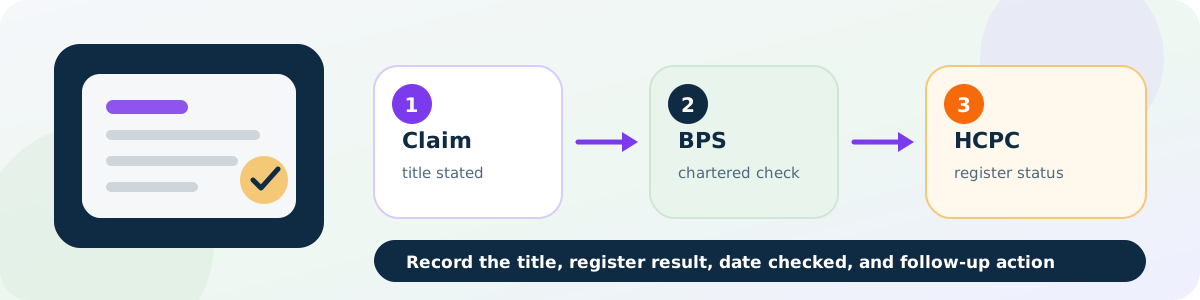
BPS Chartered Psychologist: What It Means for UK Therapists

Outline
It is 9:10am and a new private-practice referral lands with the subject line “chartered psychologist preferred.” The CV says BPS member. The website says psychologist. The insurance form asks for registration number. None of those three lines answer the same question.
That is the day-to-day problem behind bps chartered psychologist searches for UK therapists: not a dictionary definition, but knowing what status actually means before you refer, supervise, hire, or open a system account.
This guide is for UK private-practice therapists, psychologists, counselors, practice owners, and overseas-trained clinicians who need a practical map of British Psychological Society (BPS) chartered status, HCPC registration, protected titles, and credential checks. It is educational guidance, not legal advice. Edge cases belong with BPS, HCPC, your insurer, supervisor, data protection officer, or solicitor. Chartered status is a title check, not a modality certificate. Hours, format, supervised practice, and price for a named approach are compared on the solution-focused therapy training comparison.
Free PDF: BPS and HCPC Credential-Check Checklist
A printable one-page checklist for verifying BPS chartered psychologist status and HCPC practitioner-psychologist registration before referral, hiring, supervision, or software access.
- Claim details: name, title, setting, and reason for the check
- BPS chartered / CPsychol directory checks with date recorded
- HCPC protected-title register checks with date recorded
- Scope notes and follow-up actions when language and registers diverge
Free. We'll email the PDF link right away and add you to the therapist toolkit, sent every two weeks. Unsubscribe any time.
Where should we send the link?
We'll email the PDF link right away. You'll also get the therapist toolkit every two weeks. Unsubscribe any time.
✓ Check your inbox
We've sent you the PDF
The download link is on its way to your inbox, usually within a minute or two. The email will come from Emosapien (hello@team.emosapien.com); check your spam folder if you don't see it.
You're also on the therapist toolkit list, sent every two weeks. Unsubscribe any time from the email footer.
Educational resource for registered and licensed mental-health clinicians working in or alongside UK practice. BPS membership rules, HCPC protected titles, and public-register tools change over time. Verify current requirements against official sources before you rely on any workflow.
What BPS means on this page
Here, BPS means the British Psychological Society. It does not mean biopsychosocial assessment.
If you landed here from a notes or formulation search, use the clinical documentation hub for note formats, and keep this page for credentials and title checks.
What chartered status with BPS means
A BPS chartered psychologist holds Chartered membership with the British Psychological Society. In everyday UK clinical language that status often appears as:
- “Chartered Psychologist”
- “BPS Chartered”
- the post-nominal CPsychol
BPS Chartered membership (CPsychol) is professional recognition through the Society. It is a meaningful signal of psychology pathway and standards context. It is not automatic proof that someone is on the statutory HCPC register under a protected practitioner-psychologist title. When someone says they are a BPS chartered psychologist, treat that as the Society layer first, then decide whether an HCPC check is also required.
What chartered status does not automatically prove on its own:
- HCPC registration for a protected title
- The right to use every psychology-related marketing phrase without checking the law and register
- Supervision quality, indemnity insurance, or employment fitness
- Competence in every modality a practice might offer
Treat CPsychol as one credential layer. Pair it with the HCPC check when protected titles, public protection, or practice governance are in play.
BPS chartered vs HCPC registered
These are the two lines UK therapists confuse most often.
| Question | BPS chartered status (CPsychol) | HCPC registered practitioner psychologist |
|---|---|---|
| What is it? | Professional recognition / Chartered membership with the British Psychological Society | Statutory registration with the Health and Care Professions Council |
| Who runs it? | BPS | HCPC |
| Common signal | Chartered Psychologist, CPsychol, List of Chartered Members entry | HCPC registration number; protected title on the public register |
| Public check | BPS List of Chartered Members | HCPC Check the Register |
| What it is for | Professional standards context and Society recognition | Public protection and lawful use of protected practitioner-psychologist titles |
| When it matters most | Understanding Society status and chartered claims | Referrals, hiring, insurance forms, protected-title marketing, and many employer checks |
Many competent UK psychologists hold both. That is common and clean. The failure mode is assuming one line covers the other.
For regulation framing from the statutory side, see HCPC’s own explanation of psychologist regulation and the standards of proficiency for practitioner psychologists. For professional ethics context from the Society side, see the BPS Code of Ethics and Conduct. Chartered Psychologist also appears on the GOV.UK regulated professions register; use that as a map of regulated profession labels, not as a substitute for checking the live BPS and HCPC tools.
Which psychologist titles are protected in UK practice
HCPC protects specific practitioner-psychologist titles. The practical list clinicians meet most often includes specialty titles such as:
- Clinical psychologist
- Counseling psychologist
- Educational psychologist
- Forensic psychologist
- Health psychologist
- Occupational psychologist
- Sport and exercise psychologist
- Related protected forms such as registered psychologist / practitioner psychologist language used in HCPC materials
Two practice rules keep this from becoming word games:
- Name the title that is actually held. “Clinical psychologist” and “counseling psychologist” are not interchangeable labels for website copy. The lines to publish, and the lines to cut, are in examples of therapist website copy.
- Do not treat the informal word psychologist as if every use is automatically safe or automatically illegal. Protected titles are specific. Marketing still has to be accurate. When in doubt, check the register and your professional body before you publish a claim.
If you supervise trainees, assistants, or overseas-trained colleagues, write the role they actually hold today, not the title they are working toward.
How to check a psychologist’s status
Use this workflow when status matters for referral, supervision, hiring, panel membership, or system access.
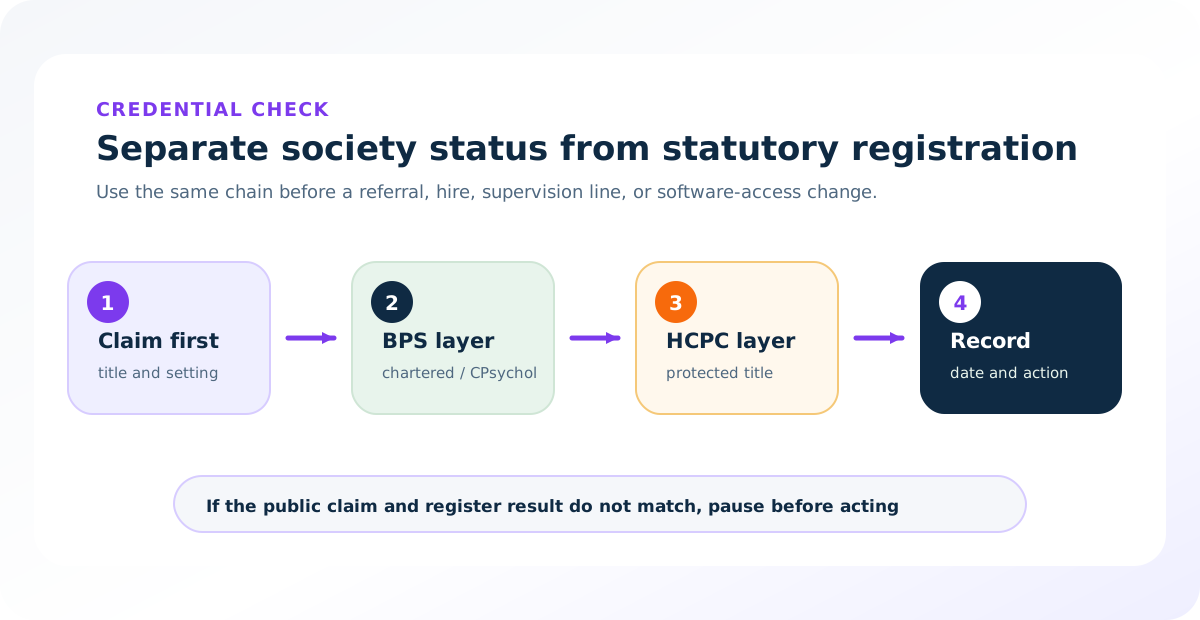
1. Write down the claim first
Capture:
- Practitioner name (as used in practice)
- Claimed title (for example clinical psychologist, counseling psychologist, chartered psychologist)
- Setting (private practice, NHS-adjacent, telehealth, supervisee)
- Why you are checking (referral, hire, supervisor approval, software admin rights)
2. Check BPS chartered status when chartered is claimed
- Search the BPS List of Chartered Members (linked from Find a psychologist)
- Record: found / not found / inconclusive
- Record the date checked
- Note any mismatch between website language and list result
- Do not treat absence from the Directory of Chartered Psychologists as proof someone is not chartered; that directory is opt-in advertising of services to the public
A public map listing is a different record from that opt-in directory. The fields to confirm are on the Google Business Profile sheet for therapists.
3. Check HCPC registration when a protected practitioner-psychologist title is claimed
- Use HCPC Check the Register
- Confirm name, profession/title, registration status, and any public conditions if present
- Record registration number only in the systems your governance already allows
- Record the date checked
4. Close the loop in your process
- Referral: put accurate title language in the referral note
- Hire / contractor: keep the check with onboarding documents
- Supervision: match the supervisee’s title and limits in the supervision contract
- Software access: grant roles based on actual clinical role, not website adjectives
If either check fails, is stale, or does not match the public claim, pause and verify with the practitioner and the relevant body before you proceed.
What this changes in therapy documentation
Credential status does not invent a new note format. It changes what you can honestly write in the record and governance trail.
In notes, consent materials, and practice systems:
- Use the practitioner’s actual role and registration language, not inflated marketing titles
- Keep supervision lines accurate (who is the named supervisor, under what title). A mentor for therapists is not that named supervisor.
- In multi-clinician practices, make sure the signed note shows the correct author identity
- When clients ask “are you a chartered psychologist?”, answer with the status you can evidence that week, not the status you plan to apply for later
For UK session-note content and record-keeping habits, use the UK therapy documentation guide. For special-category health data, processors, and AI drafting tools, use GDPR for therapists in the UK. Credential checks and documentation quality are adjacent jobs; neither replaces the other. A professional development plan for therapists is a third job: the focus you will actually try this month, not a register check.
If an AI tool drafts a note, the signed clinical author is still the registered or employed clinician responsible for the record. Status labels in software should match real-world credentials, not autocomplete guesses.
Common edge cases
Counselor vs counseling psychologist
A counselor or psychotherapist may be highly trained and still not hold BPS chartered status or HCPC registration as a counseling psychologist. Different training routes, different protected-title rules, different public checks.
Psychotherapist vs psychologist
Psychotherapist and psychologist are not synonyms in UK practice language. Do not collapse them on websites, invoices, or referral letters.
Trainee, assistant, and “working toward” language
“Trainee clinical psychologist,” “assistant psychologist,” and “chartered-eligible pathway” are not the same as holding the finished title. Write the current role. Do not let aspirational copy leak into clinical notes or client-facing claims.
Overseas credentials
An overseas psychology license or society membership does not automatically create UK chartered status or HCPC registration. Check the UK claim against UK tools before you treat it as equivalent.
Private-practice marketing
If a profile claims chartered status plus a protected title, the BPS List of Chartered Members and the HCPC register should support the full claim you are relying on. If only one half is true, say only the half that is true.
Insurance and panel forms
Payer and directory forms often ask for registration numbers, not membership slogans. Read the field. If it asks for HCPC, do not paste a BPS membership number and hope.
Download the BPS and HCPC credential-check checklist
Use the one-page checklist when you refer, hire, supervise, or grant system access. Keep the abbreviated on-page version below if you only need a screen-side prompt.
Credential-check spine
- Practitioner name recorded as used in practice
- Claimed title written exactly as presented
- BPS chartered / CPsychol claim checked when relevant
- BPS List of Chartered Members result recorded with date
- HCPC protected title claim checked when relevant
- HCPC register result recorded with date
- Scope notes added (referral, hire, supervision, software access)
- Follow-up action named if anything mismatches
Before you act on the claim
- Website language matches register language
- No client identifiers were added to the checklist
- Edge cases escalated to BPS, HCPC, insurer, supervisor, DPO, or solicitor when needed
Free PDF: BPS and HCPC Credential-Check Checklist
A printable one-page checklist for verifying BPS chartered psychologist status and HCPC practitioner-psychologist registration before referral, hiring, supervision, or software access.
- Claim details: name, title, setting, and reason for the check
- BPS chartered / CPsychol directory checks with date recorded
- HCPC protected-title register checks with date recorded
- Scope notes and follow-up actions when language and registers diverge
Free. We'll email the PDF link right away and add you to the therapist toolkit, sent every two weeks. Unsubscribe any time.
Where should we send the link?
We'll email the PDF link right away. You'll also get the therapist toolkit every two weeks. Unsubscribe any time.
✓ Check your inbox
We've sent you the PDF
The download link is on its way to your inbox, usually within a minute or two. The email will come from Emosapien (hello@team.emosapien.com); check your spam folder if you don't see it.
You're also on the therapist toolkit list, sent every two weeks. Unsubscribe any time from the email footer.
Closing
A clean UK credential check is boring on purpose. Write the claimed title. Check BPS when a BPS chartered psychologist claim is in play. Check HCPC when a protected practitioner-psychologist title is part of the claim. Record the date and the result. Then write notes, referrals, and access rights in language that matches what you verified.
If you want structured therapy documentation with clinician review before anything is signed, start a free trial of Emosapien. Software still cannot invent a registration number, repair a protected-title mismatch, or replace your own register checks.
References
- British Psychological Society. Chartered membership (CPsychol).
- British Psychological Society. Find a psychologist.
- British Psychological Society. List of Chartered Members.
- British Psychological Society. Directory of Chartered Psychologists.
- British Psychological Society. Code of Ethics and Conduct.
- Health and Care Professions Council. Check the Register.
- Health and Care Professions Council. Standards of proficiency for practitioner psychologists.
- Health and Care Professions Council. Understanding the regulation of psychologists.
- GOV.UK. Regulated Professions Register: Chartered Psychologist.