For Group Practices
Therapy Software for Group Practices That Need One Clinical Thread
A group practice runs on more than fast notes. Emosapien keeps documentation, treatment-plan context, supervision review, and between-session follow-up connected while each clinician stays responsible for the record.

THE COORDINATION LOOP
Every clinician writes into the same clinical thread
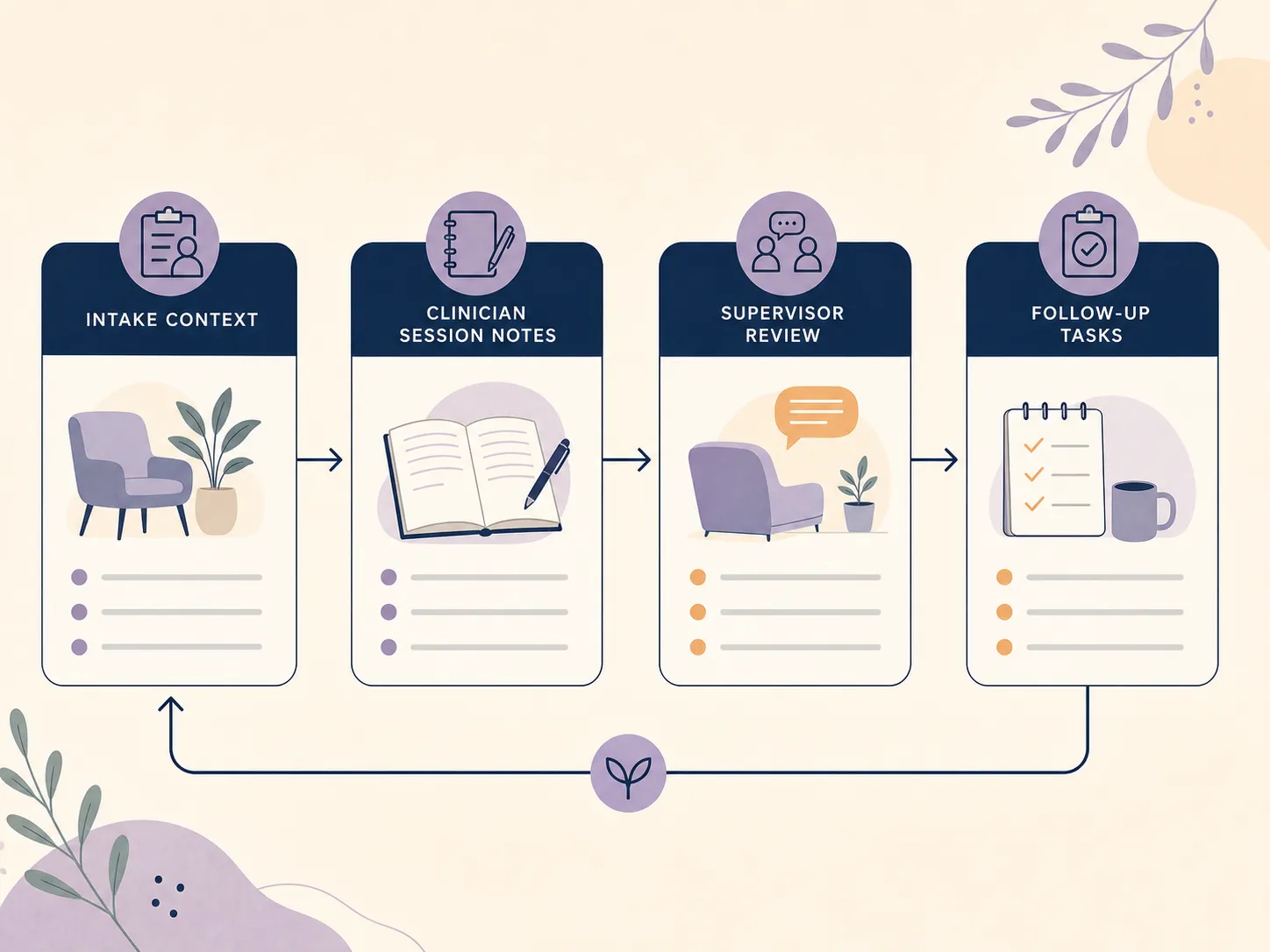
Multiple clinicians, one record. Context moves through three steps and loops back to whoever opens the file next.
Shared intake context
Intake, consent, goals, and recent check-ins gather into one shared clinical brief any authorized clinician can open.
Reviewed notes
Each clinician reviews, edits, and signs a therapy-shaped SOAP, DAP, BIRP, or GIRP draft in the house format.
Supervisor view
Goals, risk language, and open follow-ups surface for supervision without re-reading every session from scratch.
GROUP PRACTICE REALITY
The hard part is not one note. It is consistency across the team
In a multi-clinician therapy practice, the record holds more than the hour. It carries intake context, consent details, risk language, treatment-plan movement, supervision notes, follow-up tasks, and enough consistency that a clinical director can understand the work without rewriting every note.
Emosapien acts as therapy software for group practices by connecting the parts that usually drift apart: intake, live session context, reviewed progress notes, between-session check-ins, and supervision-ready summaries. If you are still deciding whether the practice should be solo or a group, the pay, control, and who owns the record card is that choice. This page is the software workflow after it.
WHERE IT HELPS
A calmer operating model for multi-clinician therapy
Therapy software for group practices reduces clinical admin friction without turning therapists into data-entry operators.
Consistent documentation across clinicians
Give every therapist a therapy-shaped note flow while leaving room for each clinician to edit, approve, and sign their own record.
Supervision without record overload
Bring treatment goals, recent check-ins, risk language, and open follow-up tasks into view so supervisors can review patterns and coach the process.
Coordination between front desk and clinical work
Keep scheduling, intake context, session notes, treatment-plan updates, and client follow-up connected instead of scattered across several tools.
WORKFLOW
From intake to supervision-ready review
Emosapien closes the handoff gaps between the clinical hour, the signed record, and the next team conversation.
Start with the documentation foundation. The clinical documentation hub maps SOAP, DAP, BIRP, GIRP, treatment plans, and progress-note basics for therapy teams.
Standardize the supervision meeting record with the clinical supervision notes template. It covers anonymized case references, guidance, actions, follow-up, and signatures. If you are buying the chart that has to carry that review, run the therapy note software supervision demo on the queue, not the meeting note.
Multi-clinician privacy controls need named owners too. Read HIPAA for group practices for role inventory, minimum-necessary access, and incident ownership.
Then connect the group-practice proof story. The group therapy clinic case study shows how a composite six-clinician team standardized note review without pretending software replaces supervision.
Before clinicians see clients
Intake details, consent notes, goals, and recent check-ins become a shared clinical brief that each authorized clinician can review before care starts.
During the clinical day
Session documentation forms in the background while each therapist stays present and keeps clinical judgment inside the relationship.
After sessions are complete
Clinicians review structured SOAP, DAP, BIRP, or GIRP drafts, then supervisors can spot missing context without reading every session from scratch.
TRUST & PRIVACY
Clinical control stays inside the practice
Therapy software for group practices respects privacy, role boundaries, consent, and the fact that every final note belongs to a clinician.
HIPAA-aware controls
Data is encrypted in transit and at rest, with access controls and audit trails designed for regulated therapy workflows.
Clinician review stays required
Emosapien can draft and organize notes, but each therapist reviews, edits, and approves the final clinical record.
Practice policy remains the boundary
Consent, retention, role permissions, crisis workflows, and supervision rules stay under your organization and local professional obligations.
Questions group-practice leaders ask before trying Emosapien
Yes. Emosapien is built for licensed mental-health clinicians in solo and group settings. Group practices can use it to keep documentation, treatment-plan context, supervision review, and between-session follow-up connected.
Access follows your practice policy and permissions. Emosapien supports organized clinical context and audit-aware workflows, and supervision visibility maps to your consent, role design, and local rules.
No. It can surface context and draft records for review. Clinical supervision, risk decisions, treatment direction, and clinician accountability remain human responsibilities.
Emosapien drafts SOAP, DAP, BIRP, and GIRP notes from each session, then every clinician edits, approves, and signs their own record in the house format.
Yes. Emosapien surfaces optional in-session CBT, ACT, or DBT prompts tied to the active goal, and it carries goals, homework, and measures like the PHQ-9 and GAD-7 into the next appointment.
Emosapien encrypts session data in transit and at rest and never trains public models on session content, so a group practice keeps client confidentiality across every clinician.
Try Emosapien with your next team clinic day
Start free with a therapy workflow that keeps documentation consistent and clinical judgment with your clinicians.