
Medicare Better Access Plan: Australian Therapist Guide

Outline
It is 4:40pm in a Melbourne consulting room. The next client arrives with a GP referral that names six sessions, no review date, and a plan written three months ago. Your diary shows five Better Access contacts already claimed this year under a different referral. You still need a clean note, a claimable service, and a GP update that will not bounce.
That is the real problem of the Medicare Better Access plan for therapists: not defining the program for patients, but running referral validity, session counts, reviews, documentation, and GP reporting without losing a week of admin.
This guide is for Australian psychologists, social workers, occupational therapists in mental health, and practice managers who deliver Better Access care. If a client arrives asking how their Medicare Better Access plan works on your side of the desk, this is the map. It covers the official pathway language, session limits, referral batches, review points, documentation that supports continuity and claiming, telehealth rules at a high level, and an ops checklist you can keep next to intake. It is educational guidance, not legal, MBS, or AHPRA advice. Confirm live item numbers, fees, and eligibility on official sources before you change a workflow.
Free PDF: Medicare Better Access Ops Checklist
A printable checklist for Australian therapy practices running Better Access episodes: referrals, session counters, reviews, notes, and GP reporting.
- Before-session-one referral and plan validity checks
- Dual counters for calendar-year limits and referral batches
- GP review-report fields and claim-trail prompts
- Close-or-extend steps for discharge or further sessions
Free. We'll email the PDF link right away and add you to the therapist toolkit, sent every two weeks. Unsubscribe any time.
Where should we send the link?
We'll email the PDF link right away. You'll also get the therapist toolkit every two weeks. Unsubscribe any time.
✓ Check your inbox
We've sent you the PDF
The download link is on its way to your inbox, usually within a minute or two. The email will come from Emosapien (hello@team.emosapien.com); check your spam folder if you don't see it.
You're also on the therapist toolkit list, sent every two weeks. Unsubscribe any time from the email footer.
Educational resource for registered mental-health clinicians practicing in Australia. Medicare Better Access rules, MBS items, and Services Australia processes change over time. Verify current requirements against official sources before you rely on any workflow.
What clients mean when they ask about the plan
Searchers often type the consumer phrase for this pathway. Official language is more precise:
| Term people use | Official framing | What your practice actually runs |
|---|---|---|
| ”The Medicare plan for psychology” | Better Access initiative under Medicare | Pathway + rebate access for eligible mental health treatment services |
| Mental health care plan / treatment plan | GP Mental Health Treatment Plan (or psychiatrist assessment and management plan) | Entry document that supports referral and goals |
| Referral for psychology | Valid allied health referral under Better Access | Batch of sessions (often up to 6) with review gates |
| Sessions left on the plan | Annual MBS limit + remaining referral batch | Calendar-year count AND referral-batch count |
Teach the official terms early in the episode. Keep the search phrase in client-facing FAQs if you want, but write internal ops around plan + referral + annual limit + review.
Therapy workbooks for adults are therapist-paced US outpatient assignments, not Better Access plans, referrals, or Medicare entitlements.
The Department of Health describes Better Access as Medicare benefits that help eligible people access selected mental health treatment services from eligible GPs, prescribed medical practitioners, psychologists (clinical and registered), social workers, and occupational therapists.
The therapist pathway at a glance
Run every new Better Access episode through the same chain:
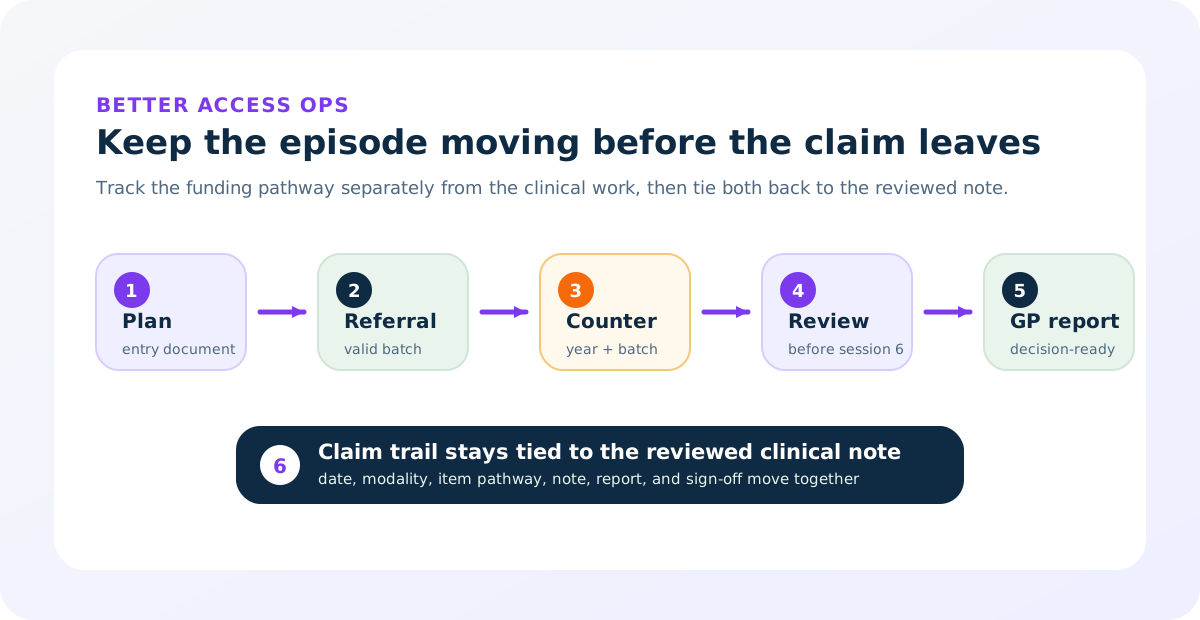
- Eligibility entry: GP Mental Health Treatment Plan, or psychiatrist assessment and management plan.
- Valid referral: from an eligible GP or prescribed medical practitioner (usual practitioner / MyMedicare practice rules apply), or a direct referral from a psychiatrist or pediatrician.
- Batch allocation: typically up to six sessions at a time, then clinical review for further sessions.
- Annual limit: up to 10 individual and 10 group Medicare-rebateable services per calendar year.
- Service delivery: face-to-face or individual telehealth where clinically appropriate.
- Documentation: assessment, session notes, risk, response, plan, and review report back to the referrer.
- Claiming: correct MBS item pathway for your profession and service type; verify numbers on MBS Online every time the schedule changes.
If any link is missing, pause before the first claimable session. Fix the paper trail first.
Session limits and the six-session referral habit
Two counters matter. Confusing them is how practices over-claim or leave unused sessions stranded.
| Counter | Rule of thumb (verify live) | Ops move |
|---|---|---|
| Calendar-year Medicare limit | Up to 10 individual + 10 group services per year | Track by client and year in your PMS |
| Referral batch | Often up to 6 sessions before GP/psychiatrist review | Diary a review after session 4–5, not after session 6 is already gone |
| Private extra sessions | Allowed, not Medicare-covered beyond the annual limit | Quote private fees before session 11 individual / 11 group |
| Carer-involved sessions | Up to 2 carer sessions may count toward the client’s individual limit when rules are met | Confirm consent and clinical recommendation in writing |
Services Australia states that help with costs under a mental health treatment plan covers up to 10 individual and 10 group sessions with an eligible mental health professional each calendar year, usually starting with a referral for up to six sessions at a time.
Build the review into the episode plan on day one. Do not wait until reception notices the referral is exhausted.
Referral validity checks before session one
Before you open a claimable Better Access episode, intake should answer yes to every line:
- Client identity and Medicare details match the referral.
- Referring practitioner is eligible (GP / prescribed medical practitioner / psychiatrist / pediatrician as applicable).
- Referral names the allied health profession and is addressed correctly for your practice.
- Plan type is clear (GP Mental Health Treatment Plan or psychiatrist assessment and management plan).
- Session batch size and any review instruction are recorded.
- Calendar-year session count from other providers is checked with the client (they may not know the exact total; still ask and document what they report).
- Telehealth vs face-to-face preference and clinical appropriateness are agreed.
- Fee policy is stated (bulk bill, gap, private after rebate limits).
If the referral is incomplete, send a short request back to the referrer instead of starting a fragile episode. For intake question design that captures payer pathway, goals, and risk early, use the therapy intake questions reference.
Documentation that keeps Better Access defensible
Better Access is not a US CPT code set, but the operational need is the same: a covering clinician and a reviewing GP should understand the care without guessing.
At minimum, keep:
| Record | Purpose |
|---|---|
| Referral and plan metadata | Who referred, plan type, batch size, annual count starting point |
| Assessment / formulation summary | Presenting problem, goals, suitability for short-term psychological work |
| Session progress notes | Focus, intervention, response, risk, plan |
| Measure scores when used | Score + clinical meaning, not numbers alone |
| Review report to GP | Sessions used, response, risk, recommendation for more sessions or discharge |
| Claim trail | Date of service, item pathway, provider number context, invoice/claim status |
Write session notes for continuity first. Claiming fails more often from broken referral trails than from imperfect prose. For format spines you can adapt without importing US payer language, see the mental health progress note templates and examples. When the claim itself needs a Better Access item, use the MBS psychology item numbers selection guide.
GP review report: keep it short
A useful GP update after a referral batch is usually one page or less:
- Sessions completed under this referral and year-to-date total the client reports or you can verify.
- Presenting focus and agreed goals from the plan.
- Interventions used and client response.
- Risk / safety status and any liaison needed.
- Recommendation: further sessions, step-down, private continuation, or discharge back to GP care.
- Any barriers (attendance, telehealth access, crisis events) that affect the next decision.
Do not send a process-note dump. The GP needs a decision-ready summary.
Telehealth under Better Access
Department of Health states that individual Better Access telehealth services introduced during COVID-19 are now permanent where safe and clinically appropriate, without the old location restriction that applied early in the pandemic. Group therapy telehealth remains limited to patients in Modified Monash Model (MMM) areas 4–7, with further group rules in official fact sheets.
Ops implications:
- Record modality (video / phone / in person) in the note and claim pathway.
- Confirm identity and location privacy at the start of remote sessions.
- Keep clinical appropriateness explicit when risk is elevated or the client needs in-person assessment.
- Do not assume group telehealth is available for metro clients.
Common Better Access ops failures
- Starting care on an expired or incomplete referral. Fix the paper before the first claimable hour.
- Tracking only the referral batch, not the calendar year. A second provider may already have used sessions this year.
- No diary for the six-session review. Reception discovers the problem when the client is already booked.
- GP reports that restate the whole chart. Decision-ready summaries get further sessions approved faster.
- Item numbers memorized from last year. Always re-check MBS Online when the schedule updates.
- Treating Better Access as a clinical modality. It is a funding pathway for short-term mental health treatment services, not a substitute for formulation or risk judgment.
- Software selected only for notes, ignoring Medicare workflow. Australian practices still need claiming, invoices, and referral tracking in the stack. For that buying decision, start with the best therapy software for Australia shortlist and the best EHR for private practice guide.
Medicare Better Access plan ops checklist
Use this section as a desk-side runbook for every Medicare Better Access plan episode.
Before session one
- Plan type confirmed (GP Mental Health Treatment Plan or psychiatrist assessment and management plan)
- Referral is valid, complete, and stored
- Profession eligibility and provider pathway confirmed
- Year-to-date individual and group counts discussed with the client
- Referral batch size and review gate entered in the diary
- Fee model explained (bulk bill, gap, private after limits)
- Telehealth vs face-to-face agreed where relevant
During the episode
- Session notes capture focus, intervention, response, risk, and plan
- Session counters update after every contact
- Review report prepared before the batch ends
- Further-session request or discharge path is explicit
- Claims match date, modality, and item pathway
Close or extend
- GP/psychiatrist update sent
- Remaining annual entitlement explained to the client in plain language
- Private continuation quoted if clinically needed beyond Medicare limits
- File holds plan, referral, notes, report, and claim trail together
Download the printable version for reception and clinician desks:
Free PDF: Medicare Better Access Ops Checklist
A printable checklist for Australian therapy practices running Better Access episodes: referrals, session counters, reviews, notes, and GP reporting.
- Before-session-one referral and plan validity checks
- Dual counters for calendar-year limits and referral batches
- GP review-report fields and claim-trail prompts
- Close-or-extend steps for discharge or further sessions
Free. We'll email the PDF link right away and add you to the therapist toolkit, sent every two weeks. Unsubscribe any time.
Where should we send the link?
We'll email the PDF link right away. You'll also get the therapist toolkit every two weeks. Unsubscribe any time.
✓ Check your inbox
We've sent you the PDF
The download link is on its way to your inbox, usually within a minute or two. The email will come from Emosapien (hello@team.emosapien.com); check your spam folder if you don't see it.
You're also on the therapist toolkit list, sent every two weeks. Unsubscribe any time from the email footer.
Closing
Better Access works when the practice treats it as an operating system: plan, valid referral, session counters, review gates, notes, GP reporting, and clean claims. Get those right and clinical work stays front and center. Get them wrong and Friday afternoons disappear into referral archaeology.
If you want structured session notes with clinician review before anything is filed, start a free trial of Emosapien. Australian practices still own MBS claiming, referral validity, privacy notices, and clinical sign-off. No software removes that work.
References
- Australian Government Department of Health, Disability and Ageing. Better Access initiative (page updated 6 February 2026).
- Services Australia. Mental health care and Medicare.
- healthdirect. Mental health treatment plan.
- MBS Online. MBS item search (verify current Better Access item numbers and descriptors before claiming).