

Group Therapy Opening Prompts: 10 Quick Session Starters

Outline
Part of the Group Therapy hub. See also: therapy questions guide (the broader pillar).
The first five minutes of group therapy do a lot of heavy lifting. If the opening feels scattered, people often stay guarded, speak less, or wait for someone else to go first. If the opening feels safe and structured, you usually get more presence, more honesty, and a smoother transition into the real work.
A good opening prompt is not “small talk.” It is a soft landing. Reliable group therapy opening prompts turn that first stretch of the session from a guessing game into a repeatable routine.
It can help you:
- lower the pressure to perform, especially for members with social anxiety or trauma histories
- establish a predictable rhythm (which can feel containing for groups that struggle with transitions)
- surface risk flags early: stress spikes, cravings, conflict, isolation
- connect the group to a shared theme: values, coping, communication, repair
And importantly, it keeps check-ins from turning into long, unstructured storytelling right from the start.
Print the 50-question bench and take it into the room when you need more options than the ten starters below. The PDF is a facilitator prompt bank, not a script that replaces clinical judgment.
Get the 50 Group Therapy Check-In Questions PDF
A printable prompt bench across opening, working, addiction-focused, and closing categories. Email the link and keep the bank beside your session plan.
- 50 questions across 4 group-phase categories
- Opening, working, addiction-focused, and closing prompts
- Bench-style bank for therapy and recovery groups
- Printable on two pages, no header noise
Free. We'll email the PDF link right away. We may also send the occasional therapist toolkit. Unsubscribe any time.
Where should we send the link?
We'll email the PDF link right away. You'll also get the occasional therapist toolkit. Unsubscribe any time.
✓ Check your inbox
We've sent you the PDF
The download link is on its way to your inbox, usually within a minute or two. The email will come from Emosapien (hello@team.emosapien.com); check your spam folder if you don't see it.
You're also on the weekly therapist toolkit list. Unsubscribe any time from the email footer.
Why opening prompts for group therapy help so much
Think about what is happening for a member walking into your group room. They have come from work, a difficult afternoon, or a phone call they have not fully processed yet. They need a moment to cross the threshold before they can be fully present.
A structured opening prompt gives them that moment. And it gives you useful clinical information before you have even started the main work.
The Association for Specialists in Group Work (ASGW) Best Practice Guidelines address group workers’ responsibilities in planning, performing, and processing groups. Under that frame, a short structured opening is one planning and performing choice: pick a predictable first turn, keep time and pass options clear, and let your read of the room shape what follows.
As Yalom and Leszcz describe in The Theory and Practice of Group Psychotherapy, cohesion is one of the primary therapeutic factors in group work, and it depends heavily on early engagement within sessions. Getting a quiet member to say two sentences in the first three minutes is worth more than prompting them repeatedly mid-session. A structured opening creates that early entry point without putting anyone on the spot.
How to pick the right prompt in under 10 seconds
When choosing group therapy opening prompts, I usually ask one quick question: do we need safety, energy, or direction today?
- Safety prompts work best for newer groups, trauma-informed spaces, or days when the room feels tender.
- Energy prompts help when the group is flat, disengaged, or anxious and avoidant.
- Direction prompts are great when you are running a skills group, you have homework to review, or time is tight.
Keep four jobs separate so the first five minutes stay lean:
- Opener: the first-turn arrival prompt that gets each member into the room.
- Check-in bank: a wider menu and format choice when you need more variety than one starter (see check-in questions for group therapy).
- Topic: the clinical theme for the working phase, chosen from your group therapy topics plan rather than invented mid-check-in.
- Activity: the shared task under that theme, not a second round of arrival questions.
Pick one opener and keep it time-bound (30 to 60 seconds per person, and “pass” is always allowed). The opener bridges into the session’s already-chosen topic; it does not replace the topic or the core activity.
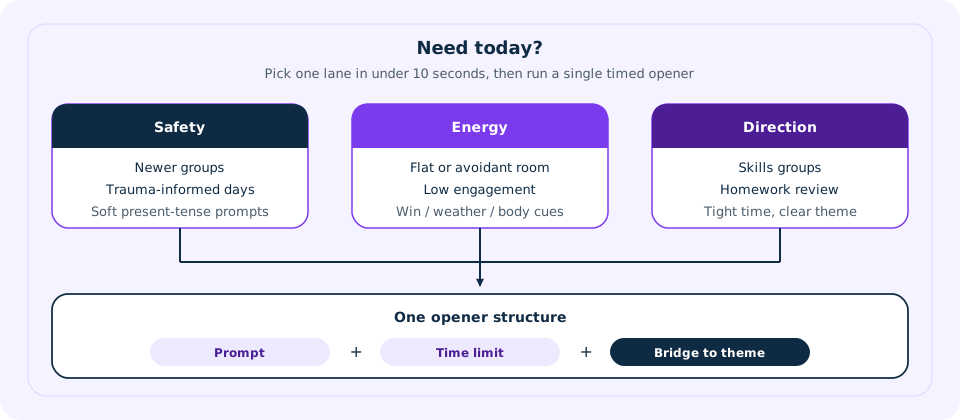
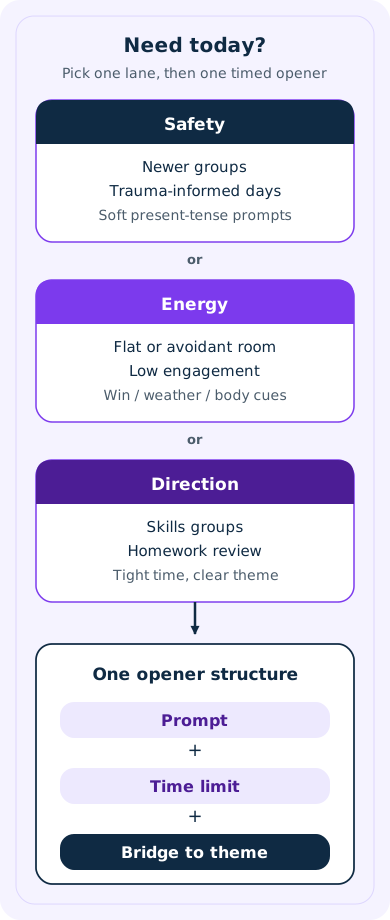
Choose the need first. Then run one timed opener and bridge into the theme you already planned.
10 group therapy opening prompts you can use today
- “One word for how you’re arriving, and one word for what you need.”
- “On a scale of 0 to 10, how steady do you feel today, and what would raise it by one point?”
- “What’s one small win since last session, even if it feels minor?”
- “What’s one thing you’ve been carrying this week that you don’t want to carry alone?”
- “What’s your inner weather right now (sunny, foggy, stormy, windy), and why?”
- “What’s one boundary you held, or wish you had held?”
- “What’s one moment you felt triggered, and what did you do next?”
- “What support do you want from the group today (listening, ideas, accountability, encouragement)?”
- “What’s one value you want to act from today, even imperfectly?”
- “If today’s session could help with one thing, what would make it worth it for you?”
If you want to keep it even tighter, use a two-part format: one number (mood or stress 0 to 10) plus one sentence.
Adapting prompts for your group format
The prompts above work well in general therapy groups. But if you run a modality-specific format, a few adjustments go a long way.
DBT skills groups
Pair the opening prompt with the skill module you are covering. Instead of a mood number alone, ask: “What’s one distress tolerance or emotion regulation skill you tried this week, even briefly?” This ties the check-in directly to the curriculum and makes skills practice feel like a shared group norm rather than optional homework. When a numeric scale feels clinical or distancing for your members, try the inner-weather prompt (number 5 in the list above) as a softer alternative, then notice in your notes which format this cohort uses with less friction.
Trauma-informed groups
Avoid “what happened” framing at the opening. Present-tense and sensation-based prompts are often safer first turns: “How is your body feeling right now (tense, calm, somewhere in between)?” or “What’s one small thing helping you feel grounded today?” They aim for present-moment contact instead of story detail before the group has settled. Individual response still varies, so keep a pass option and use your clinical judgment if a member is already activated.
Addiction recovery groups
Scales are useful here because they track craving or urge intensity without requiring members to narrate details in front of the group. A prompt like “On a scale of 0 to 10, how strong were your urges this week, and what helped you get through?” invites meaningful disclosure without pressure. Prompts that celebrate restraint (“What’s one moment you chose not to use?”) can shift group culture toward noticing and naming small victories.
The American Group Psychotherapy Association (AGPA) Practice Guidelines for Group Psychotherapy are a useful baseline when you are designing or revising a group curriculum. Review them alongside your population-specific training and agency protocols rather than treating any single prompt set as a complete program.
Open vs. closed groups
One more variable worth naming: open-enrollment groups need more consistency than closed cohorts. In a closed group where members have built trust over several weeks, you can rotate prompts freely. In an open-enrollment group where someone new joins most weeks, anchor each opening with one of the simpler formats (prompts 1 or 2) so new members are not disoriented before they have found their footing in the group.
Three facilitation challenges and how to handle them
Even a well-chosen prompt runs into real-group complications. Here are the three you will hit most often.
The member who takes too long
Set the time frame before anyone answers: “I’ll ask everyone to take about 45 seconds.” If someone runs over, use a gentle bridge: “That’s a good place to pause. Let’s hear from the rest of the group and we can come back to this.” A consistent structure makes the limit feel like a group norm, not a personal correction.
Emotional flooding during the prompt
It happens. A member starts answering and becomes tearful or overwhelmed before the group is fully settled. Keep a brief grounding phrase ready: “Take a breath. You can pass for now.” Then hold the space briefly before moving on. Coming back to that member later in the session, when the group has more cohesion, usually works better than pressing through in the opening.
Consistent non-engagement
Some members will not engage with check-in prompts, especially early in a group’s life. Always state “pass is fine” before the first person answers. That normalizes stepping back without making it a stand. A member who passes three or four sessions in a row is giving you clinical information worth following up on individually, outside the group, rather than escalating prompts inside it.
A simple way to stop openings from running long
If your group tends to go deep fast (and blow the clock), try this structure:
Prompt + time limit + bridge.
For example:
“Share one word for how you are, and one thing you want from today. Keep it to 45 seconds. After everyone shares, we’ll pick one theme to focus on.”
That bridge line matters. It turns the opening into a doorway instead of a detour.
Using opening check-in data in your session notes
The 0-to-10 number from your opening prompt is member-reported session information, not a validated outcome measure. Recording each member’s stated mood or stress at session start, and optionally again at close, still gives you a light pre/post signal you can chart with almost no extra documentation effort.
Over eight to twelve sessions, patterns can emerge that are worth clinical review. One member may often arrive low and leave higher; another may report high distress and still rarely initiate. Treat those patterns as hypotheses to document and take to supervision, not as proof of progress on their own.
Separate group-level themes from member-specific responses before you chart. The room may share a common stressor while each member still needs their own clinically specific line. Use the free group notes generator when you want a therapist-reviewed draft that starts from those opening signals. You still correct, complete, and sign the note; the tool does not replace member-specific assessment or clinical review.
Make your openings consistent without adding admin
Consistent group therapy opening prompts remove one more decision from your week without flattening the clinical read you get from each check-in. Running groups regularly means deciding on a prompt each week, tracking which ones landed, and remembering which members need follow-up from the last check-in. It is low-stakes individually, but it adds up over a full caseload.
Keep a short starter list (the ten above), a printable bench for variety, and a notes path that captures opening data without reconstructing the hour from memory later. You stay in control of the clinical direction. You just stop reinventing the first five minutes every week.