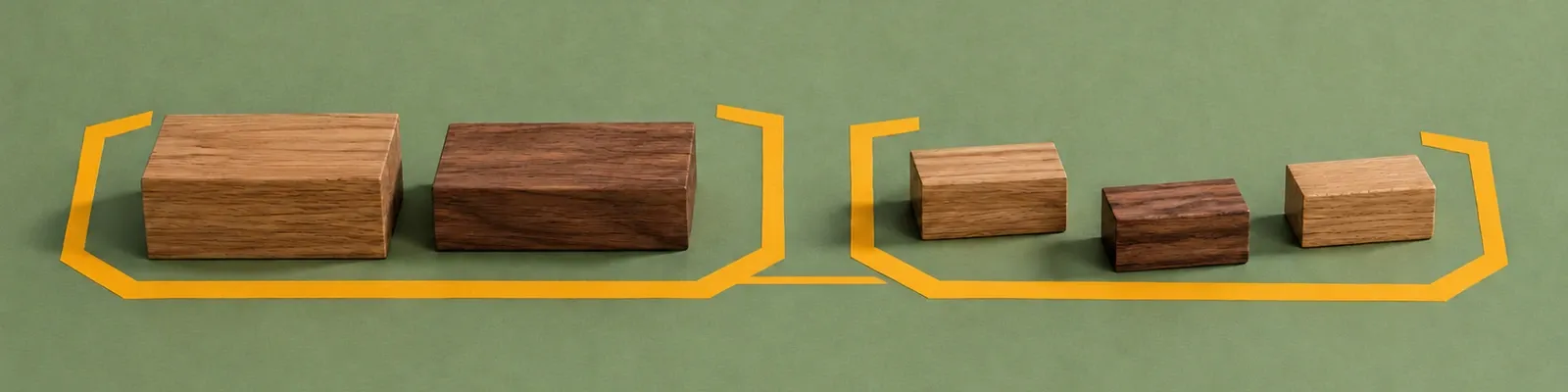
Structural Family Therapy Techniques: Session Map

Outline
Authored by Dr. Elena Vasquez, licensed psychologist (PsyD), play-therapy and child-and-family-therapy trained, with a family-systems lens across home, school, and clinic.
Educational content for licensed therapists, not clinical or legal advice. Structural work is not a substitute for family-therapy training, a violence screen, or your setting’s safety steps. Adapt the map to culture, consent, developmental stage, and who actually has the authority to decide.
You just looked at a Tuesday that has already happened in a hundred offices. Jordan is the name on the referral. Pat is the person who answers. Chris is in the room and outside the decision. Dana is carrying both of them and calling it parenting.
Structural family therapy techniques start from the arrangement you can see, not from a speech about communication skills. Salvador Minuchin mapped troubled families by subsystems and boundaries, then used restructuring moves to press on that organization. The book is Families and Family Therapy (Minuchin, 1974). The spouse subsystem, the parental subsystem, and the sibling subsystem each need a boundary. A parental child has been pulled up into an adult job. The symptom often keeps that arrangement stable.
The glyphs above are a session key, not a claim that every training program draws the same mark. Keep one key on the map so a covering clinician can read it next month. Clear, rigid, and diffuse are the distinctions. The ink is yours.
Free PDF: Family Therapy Genogram Template
A printable family therapy genogram template with consent prompts, symbol key, three-generation map space, household fields, and a one-sentence pattern hypothesis.
- Consent, scope, and identified-patient trap checks
- Household membership and multi-home schedule fields
- Symbol key and three-generation map space
- Relational marks, pattern hypothesis, and next-session planning
Free. We'll email the PDF link right away and add you to the therapist toolkit, sent every two weeks. Unsubscribe any time.
Where should we send the link?
We'll email the PDF link right away. You'll also get the therapist toolkit every two weeks. Unsubscribe any time.
✓ Check your inbox
We've sent you the PDF
The download link is on its way to your inbox, usually within a minute or two. The email will come from Emosapien (hello@team.emosapien.com); check your spam folder if you don't see it.
You're also on the therapist toolkit list, sent every two weeks. Unsubscribe any time from the email footer.
What the map is doing
The family arrived with a verdict. “It’s Jordan.” Your job in the first ten minutes is not to argue with that verdict. It is to draw the organization that makes the verdict useful to everyone except Jordan.
A structural map answers four questions while they are still in the chairs:
- Who is supposed to decide, and who actually decides?
- Where is the boundary clear, where is it rigid, and where does membership leak?
- Who has been recruited against whom?
- What transaction, if it changed, would make the symptom less necessary?
If you cannot answer those from what just happened in the room, you do not have a map yet. You have a genogram impulse, or a story about home. Both can matter later. Neither is this hour’s instrument.
Minuchin worked from session transcripts and from the tactics a therapist uses while the family is in front of them (Minuchin, 1974). If you only write what they report about Monday night, you will chart the family’s theory. The map is for the theory you are willing to test before they stand up.
Four assessment steps before you restructure
Nichols and Tafuri (2013) watched expert structural consultations and described a four-step assessment that moves the room off the identified patient. Use it before you get clever.
- Broaden the complaint so it includes the context. “Jordan will not get up” becomes “the morning plan has three authors and no decider.”
- Find the interaction that keeps the complaint in place. In the Pell hour, that interaction is Pat answering, Dana checking Pat, and Chris correcting the plan after it has already failed.
- Touch the past only as it explains the current structure. Pat moved in after a surgery. The hierarchy made sense then. It is still running on a morning that no longer needs a third parent.
- Build one shared picture of a path. Not a new family personality. One decision the executive pair can complete.
The four steps are an assessment sequence, not a danger screen. If the week included a threat, a weapon, or someone who cannot refuse, map from report. Do not ask them to perform the danger so you can see it.
If consent, the roster, and who may hear what are not settled, stop and use the family therapy intake form before you draw. A map of people who did not agree to be charted is a record problem, not a structural insight.
Structural family therapy techniques that follow the map
Once the map names one transaction, the techniques are small. Join first. Then enact. Then restructure that one line. Then stop.
Join means you enter the arrangement before you challenge it. Pat needs to hear that you saw the morning labor, or the block will land as an insult to an elder. Chris needs to hear that you noticed the coat and the correction, or he will experience you as Dana’s ally. Dana needs to hear that you are not handing her a third job. Jordan needs a privacy line: you will not narrate the coalition to the adults as if Jordan invented it. Minuchin’s session work starts inside the family’s organization, then presses on it (Minuchin, 1974). A cold diagram announced from your chair is not joining.
Culture sets who is supposed to hold executive rank. In some households a grandparent’s authority is the healthy hierarchy, not a leak. You do not import a two-parent nuclear picture and call the difference pathology. You ask who is supposed to decide this particular item, in this household, this month. Then you test whether the people in the room can complete that item.
Enactment in the chairs
You can choose an enactment: stop taking the report, and ask them to do the transaction in the chairs.
“Dana and Chris, decide the arrival time for tomorrow. Talk to each other. Pat, I am going to ask you to wait. Jordan, you will hear the decision. You do not have to like it.”
Then you watch. Who looks at Pat. Who looks at you. Who restates Jordan’s attitude instead of naming a time. Who goes silent in a way that pulls Noah’s eyes up from the cars.
That watching is the technique. The speech you prepared about boundaries is not. If they can describe the problem beautifully and still cannot decide a time while you block the usual answer, the description was the family’s public theory. The enactment is the structure.
When the talk slides, you have three small returns. Use one.
- Name the slide. “You are back on Jordan’s attitude. The decision is a time.”
- Block the recruit. “Pat, hold that. Dana, finish the sentence to Chris.”
- Shrink the task. “Not the semester. Tomorrow. One time.”
If you use all three in a pile, you are working harder than the pair. That is a signal to stop, not to add intensity.
One move, then stop
Use structural family therapy techniques on one transaction. The Pell map has six marks. You do not treat all six today. You pick the mark that, if it moved, would make the referral less necessary. Here that mark is the spouse boundary on one school morning.
The other marks stay on the page so you do not forget them. Noah’s messenger job is real. You protect it by not using him. You do not open a second restructuring on an eight-year-old in the same hour you are asking his parents to decide a time.
A second move is how clinicians soothe their own anxiety that the hour was not enough. The family experiences it as another adult rearranging the furniture. One completed decision beats a tour of the model.
Restructuring moves, same labels as the map
Use the same four labels in the note so a covering clinician can read the move without learning a second vocabulary.
Boundary making
-
Map element: The line you will make visible, not every line on the page
-
Symbol: Double line if contact is too thin, dotted line if membership is leaking, single line if contact is allowed and membership is not
-
What it shows: Who may speak into this decision, and who may only hear it
-
Session move: State the job out loud, then enforce it once. “Pat, witness. Dana and Chris, the time.” If you explain the theory of boundaries for five minutes, you have left the enactment.
Unbalancing
-
Map element: The subsystem that cannot get a transaction completed
-
Symbol: Your chair, briefly, on their side of the line
-
What it shows: Neutrality is not the virtue here. A missing executive person stays missing if you only reflect
-
Session move: Lend weight long enough for one sentence to land. “Chris, stay. Dana asked you for a time, not a verdict on Jordan.” Then step back. Do not spend the hour as Chris’s lawyer, and do not shame Pat for a job the house assigned.
Blocking the detour
-
Map element: The zigzag that runs the spouse conflict through the referred child
-
Symbol: Arrow through the child’s name, which you refuse to follow
-
What it shows: The symptom is employed. Attendance trouble keeps Dana and Chris from having to face each other
-
Session move: One return to the decision. If they cannot tolerate it, that inability is the note. Do not punish them with a longer lecture.
Hierarchy, one item
-
Map element: Who is drawn above the parental line for this topic
-
Symbol: Name above the line, with the item written under it (school morning, not “the family”)
-
What it shows: Executive rank can be healthy. It is a problem when the person above the line is not the person who must live with the decision, or when a child has been pulled up to keep the adults apart
-
Session move: Return one item to the people who have to carry it tomorrow. Leave the elder’s rank intact on the items that still belong to them. A grandmother who manages medications does not need to be demoted because she also manages the alarm clock.
How this differs from a genogram
A genogram is the long map. Three generations, losses, partnerships, who left, who moved in, which household a child actually sleeps in. When that picture is the missing one, use the family therapy genogram template. Squares, circles, and a household boundary belong on that sheet.
A structural map is the short map. It expires if you do not test it. It cares who answers a question in this room, not who died in 1998, unless that death is why the hierarchy still runs this way. You can sketch a three-generation note in the margin. Do not let the margin become the hour.
The two maps fail in opposite directions. A genogram without a live boundary becomes a family tree you admire. A structural map without any history becomes a rude interruption of a hierarchy you did not understand. Sequence them. Intake and history first if the roster is unclear. Structural map once you know who is allowed to be in the work.
Strategic family therapy is a different job again. It watches the sequence that keeps the problem going and often designs a task for after they leave. Stay with the live organization when you can interrupt it while they are still sitting down. If they cannot enact in the room, name that. You are designing a later task, not changing a boundary. Do not disguise a homework directive as a structural move. If the hour needs a wider menu of family methods, use family therapy techniques. Boundary work is the job when the line in the room is the thing you can change.
What to write after the hour
Write the transaction, not the slogan. “Processed family conflict” is how the map dies in the chart.
A covering clinician needs five lines:
- Who was in the room, and who answered for whom.
- The boundary you marked, in ordinary words.
- What happened when you blocked the usual answer. Did the pair finish a decision, stall, or recruit the person you asked to wait?
- Whether a child was protected from messenger duty.
- The exact transaction you will test next time. One item. One pair.
The hypothesis you already marked belongs in the note you sign. In-session notes can hold that sentence so you stay with the enactment instead of reconstructing it at 9 p.m. The software does not decide who holds the executive role. You do.
When you do not stage the pattern
Do not ask a family to enact a violent transaction. If the last week included a threat, a weapon, a child hiding, or someone who cannot refuse the conversation, map from what they report and follow your setting’s safety steps. Restructuring is not a dare.
Do not unbalance a household by humiliating the only stable adult in it. Pat may be the person who gets Jordan to school at all. A three-minute witness job is a probe. A speech about enmeshment is an attack. If the probe spikes shame, you repair before you push.
Do not pull a young child into the adult decision to make your map look complete. Noah’s presence is data. His commentary is not your instrument.
Do not treat a cultural executive rank as a diffuse boundary because it differs from the family you grew up in. Ask who is supposed to decide this item. Join that answer. Challenge it only when the item is harming someone who cannot leave the arrangement, and say that reason out loud.
If you remember one habit from structural family therapy techniques, test that same transaction next week before you add a second move. The map is a hypothesis. The next hour is the test. A new diagram every session is how you stay busy and the family stays the same.
Minuchin family systems, held to one transaction
Minuchin family systems, in the room, means the symptom has a job. Jordan’s refusal keeps a spouse conflict from having to become a decision. Pat’s answers keep a parental boundary from having to close. Noah’s reports keep the adults from facing each other. You do not need the whole theory in the note. You need the job you are willing to interrupt, the person you will not shame for having held it, and the one item that returns to the people who must live with it tomorrow.
That is the whole of structural family therapy techniques in a live hour: one line you can see, one interruption, one sentence in the note.
Download the genogram template
The structural map is drawn in the session. It is not a substitute for a three-generation sheet when history, household membership, or a cutoff is the missing picture. The family therapy genogram template is that sheet: a symbol key for belonging across generations, space for the household, and a short hypothesis line. Use it when the long map is the job. Come back to the structural map when the job is who answers in the chairs.
Free PDF: Family Therapy Genogram Template
A printable family therapy genogram template with consent prompts, symbol key, three-generation map space, household fields, and a one-sentence pattern hypothesis.
- Consent, scope, and identified-patient trap checks
- Household membership and multi-home schedule fields
- Symbol key and three-generation map space
- Relational marks, pattern hypothesis, and next-session planning
Free. We'll email the PDF link right away and add you to the therapist toolkit, sent every two weeks. Unsubscribe any time.
Where should we send the link?
We'll email the PDF link right away. You'll also get the therapist toolkit every two weeks. Unsubscribe any time.
✓ Check your inbox
We've sent you the PDF
The download link is on its way to your inbox, usually within a minute or two. The email will come from Emosapien (hello@team.emosapien.com); check your spam folder if you don't see it.
You're also on the therapist toolkit list, sent every two weeks. Unsubscribe any time from the email footer.
References
- Minuchin, S. (1974). Families and family therapy. Harvard University Press. https://www.hup.harvard.edu/books/9780674041127
- Nichols, M., & Tafuri, S. (2013). Techniques of structural family assessment: A qualitative analysis of how experts promote a systemic perspective. Family Process, 52(2), 207-215.