Choose Mentalyc if
You want documentation and treatment plans first
Mentalyc fits clinicians who want AI therapy notes and treatment planning as a dedicated documentation layer on top of the EHR they already run.
Choose Mentalyc if you want AI documentation and treatment planning as a dedicated layer on your current EHR. Choose Upheal if you want AI notes plus a wider practice workflow with portal, telehealth, and operations. If you need therapy-only active co-therapy across the session and the week, compare Emosapien next.
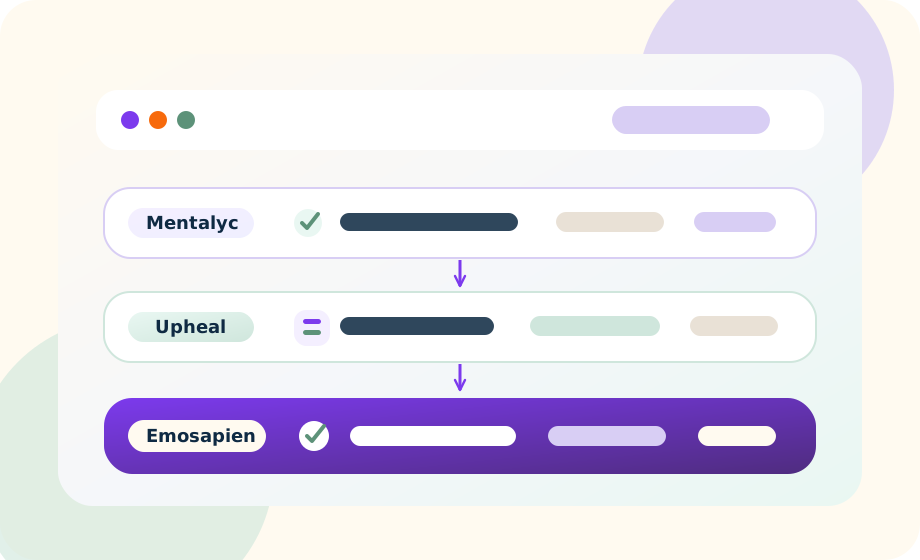
Therapists who already know both vendors need a clear buying answer. A Mentalyc vs Upheal shortlist is common because both tools solve adjacent jobs in a therapy practice.
Mentalyc centers AI documentation and treatment planning. Upheal centers AI therapy notes and a broader practice-operations surface. Emosapien enters only after that tradeoff is clear.
Quick verdict
Mentalyc fits clinicians who want AI therapy notes and treatment planning as a dedicated documentation layer on top of the EHR they already run.
Upheal fits clinicians who want AI therapy notes and are ready to run more practice operations, telehealth capture, client portal work, and records in one AI-native workflow.
Emosapien drafts modality-aware notes, keeps optional in-session prompts therapist-controlled, carries treatment goals forward, and runs between-session check-ins, homework, journaling, and measures in one therapy workflow.
Feature table
The Mentalyc vs Upheal gap is documentation-plus-plans versus notes-plus-practice-ops. The table below shows where each product is stronger.
AI therapy documentation and treatment-plan tooling for mental health clinicians
AI therapy notes plus AI-native practice operations and EHR-style workflow
Strong post-session note drafting with broad therapy templates
Strong AI note drafting with ambient capture and therapy templates
SOAP, DAP, BIRP, GIRP, and related therapy formats with template coverage
SOAP, DAP, BIRP, and related therapy formats inside the notes workflow
Treatment planner with progress tracking around documentation
Treatment plans with Golden Thread style linking across notes
Post-session capture and drafting; no live clinical participation
Ambient capture with next-question style support during the visit
Documentation-first product that sits beside the practice stack
Client portal, forms, telehealth capture, and post-session summaries
Best as documentation layered on an existing therapy EHR
Positions as AI-native EHR replacement with scheduling, telehealth, and billing
Progress tracking and alliance-oriented insights around notes
Session and caseload analytics across notes and client activity
Seat plans with a short trial; public tiers around Mini, Basic, and Super
Usage pricing around $1 per session, capped near $69 per month, plus a 30-day full trial
HIPAA-oriented claims with BAA and SOC 2 on public trust pages
HIPAA-oriented compliance claims for therapy documentation and practice data
| Capability | Mentalyc | Upheal |
|---|---|---|
| Core product job What the platform is built to do day to day | ✓ AI therapy documentation and treatment-plan tooling for mental health clinicians | ✓ AI therapy notes plus AI-native practice operations and EHR-style workflow |
| AI progress notes Structured therapy note drafting from session work | ✓ Strong post-session note drafting with broad therapy templates | ✓ Strong AI note drafting with ambient capture and therapy templates |
| Note format breadth SOAP, DAP, BIRP, GIRP, and related therapy formats | ✓ SOAP, DAP, BIRP, GIRP, and related therapy formats with template coverage | ✓ SOAP, DAP, BIRP, and related therapy formats inside the notes workflow |
| Treatment plans Plan drafting and plan-aware clinical support | ✓ Treatment planner with progress tracking around documentation | ✓ Treatment plans with Golden Thread style linking across notes |
| In-session support Live help while the appointment is running | ✗ Post-session capture and drafting; no live clinical participation | ○ Ambient capture with next-question style support during the visit |
| Client portal and telehealth Client-facing forms, portal, and video capture surface | ○ Documentation-first product that sits beside the practice stack | ✓ Client portal, forms, telehealth capture, and post-session summaries |
| Practice operations / EHR scope Scheduling, billing, records, and stack consolidation | ○ Best as documentation layered on an existing therapy EHR | ✓ Positions as AI-native EHR replacement with scheduling, telehealth, and billing |
| Progress tracking and insights Analytics, alliance signals, and caseload indicators | ✓ Progress tracking and alliance-oriented insights around notes | ✓ Session and caseload analytics across notes and client activity |
| Pricing posture How clinicians try and pay for the product | ✓ Seat plans with a short trial; public tiers around Mini, Basic, and Super | ✓ Usage pricing around $1 per session, capped near $69 per month, plus a 30-day full trial |
| Trust and compliance Security and covered-entity posture claims | ✓ HIPAA-oriented claims with BAA and SOC 2 on public trust pages | ✓ HIPAA-oriented compliance claims for therapy documentation and practice data |
Vendor facts are based on public US pages checked July 2026. Functionality and terms can change after publication.
Workflow feel
Fit often shows up in the rhythm of the day, not in a single feature checkbox.
Mentalyc stays documentation-centered. Intake forms and pre-session prep usually sit with the clinician or the existing EHR.
Upheal can open the visit with practice operations already in place: scheduling, intake forms, portal activity, and record setup.
Emosapien carries goals, homework, journaling, check-ins, and measure trends into a pre-session brief tied to the active treatment plan.
Mentalyc records or uploads the session and drafts the progress note after the appointment ends. The AI does not join the clinical work live.
Upheal captures the session for AI note drafting and can surface next-question style support while the clinician stays focused on the client.
Emosapien keeps optional CBT, ACT, and DBT prompts therapist-controlled while the Scribe Agent drafts SOAP, DAP, BIRP, GIRP, or PIE notes from session context.
Mentalyc finishes notes, supports treatment planning, and tracks progress signals around the documentation workflow.
Upheal finishes notes, keeps the chart current, and handles more practice admin such as billing follow-through inside the same platform.
Emosapien finalizes clinician-reviewed notes, updates treatment-plan continuity, and runs between-session engagement plus outcome measures into the next appointment.
Mentalyc edge
Upheal edge
After the vendor shortlist
After you settle this vendor tradeoff, Emosapien is the therapy-only co-therapy layer if you want notes, optional in-session prompts, homework, and measures in one workflow.
Start with the AI clinical notes workflow, then use the scored head-to-heads for Emosapien vs Mentalyc and Emosapien vs Upheal if one vendor is already in your stack. When Blueprint is also on the shortlist, open the master hub for Upheal vs Mentalyc vs Blueprint.
Neither wins for every practice. Choose Mentalyc when AI documentation and treatment planning on top of your current EHR matter most. Choose Upheal when AI notes plus a wider practice-management and EHR-style surface matter most. If you want therapy-only co-therapy across the session and the week, evaluate Emosapien next.
Mentalyc often fits solos who want a documentation engine and already like their EHR. Upheal often fits solos who want notes and more operations in one product, especially if session volume is uneven. Emosapien keeps a permanent free tier at 10 sessions per month so a solo clinician can test real sessions before buying.
Upheal can fit groups that want one AI-native stack for notes, portal work, telehealth capture, and practice operations. Mentalyc can fit groups that already standardized on an EHR and mainly want shared documentation quality and treatment-plan support. Team readiness depends on how much of the stack you want to consolidate.
It depends on volume and trial needs. Mentalyc publishes seat tiers with a short trial. Upheal publishes usage pricing around $1 per session with a monthly cap near $69 and a 30-day full trial. Emosapien keeps a permanent free tier at 10 sessions per month. Confirm current vendor prices before you commit.
Both support structured therapy notes. Mentalyc is known for broad template coverage across SOAP, DAP, BIRP, GIRP, and related formats. Upheal also drafts SOAP, DAP, BIRP, and related therapy notes inside its notes workflow. Emosapien drafts SOAP, DAP, BIRP, GIRP, and PIE from session context with clinician sign-off.
Yes. Upheal runs a broader AI-native practice workflow: scheduling, telehealth, portal, billing, and records. Mentalyc stays documentation and treatment-plan focused and usually sits beside the EHR you already use. Pick based on whether you want to replace more of the stack.
Both publish HIPAA-oriented claims for therapy documentation, and both discuss BAA and security posture on their trust pages. Emosapien encrypts data in transit and at rest, is SOC 2 Type II audited and ISO 27001 certified, and offers a BAA on Professional and Enterprise. Confirm the current BAA path with each vendor before go-live.
Settle the vendor tradeoff first. Then compare Emosapien when you want a therapy-only layer: modality-aware notes, optional in-session co-therapy, treatment-plan continuity, between-session engagement, and measurement in one workflow.
Start free with 10 AI-generated sessions per month, no credit card, no countdown. Review notes, goals, measures, and between-session work on real sessions before you switch tools.