Emosapien
Power Diary comparison

Power Diary alternatives for therapy practices

Power Diary (now presented as Zanda) is a strong practice-management system for diary, portal, billing, and claims. Emosapien adds the therapy-specific AI workflow around the session: AI-drafted notes, optional in-session prompts, treatment-plan continuity, and measures tied to the next appointment.

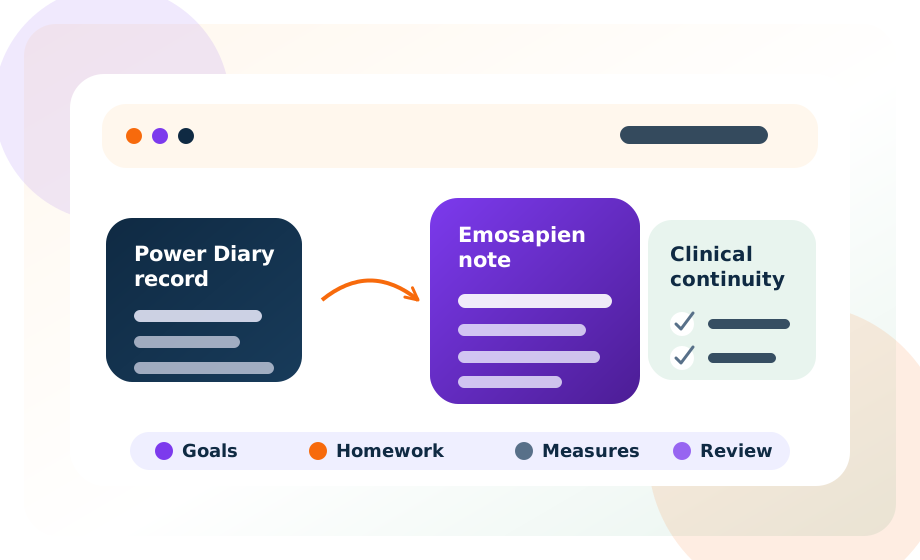
A calm product workflow showing Power Diary as the practice record with Emosapien connecting notes, goals, homework, measures, and clinician review

Keep Power Diary when diary, portal, and claiming are the gap. Evaluate Emosapien when therapy-specific AI notes and continuity are the gap.

What Emosapien adds

Emosapien connects the note, goals, homework, journaling, measures, and next-session context in one therapy workflow.

Who this fits

Keep Power Diary. Add therapy-specific AI

Therapists compare power diary alternatives when they already like the diary but want better therapy notes, optional in-session prompts, or homework, journaling, and measures tied to the treatment plan, without swapping billing software.

Power Diary handles the practice system: appointments, portal, payments, telehealth, forms, and claiming. Emosapien handles the therapy work around that system for AU, UK, and multi-region practices.

Therapy workflow

Emosapien works before, during, and after the note

The Scribe Agent drafts the note, the Co-Therapy Agent surfaces optional prompts, and the Engagement Agent keeps clients connected between sessions.

The therapist edits, approves, and decides what belongs in the Power Diary record.

PM system plus therapy workflow

Power Diary alternatives: keep the diary, add AI therapy work

Power Diary centers practice management and claiming. Emosapien centers the therapy workflow that fills the note and carries care to the next visit.

PM system

Practice system

Power Diary role
Power Diary (now presented as Zanda) runs practice management: online booking, diary, custom portal, forms, reminders, invoicing, payments, and claiming workflows.
Emosapien outcome
Emosapien runs the therapy AI workflow around the record: session context, AI-drafted notes, goals, measures, and clinician review.
Therapy workflow

Clinical notes and templates

Power Diary role
Power Diary stores client records and clinical notes with templates inside the practice-management chart.
Emosapien outcome
Emosapien drafts SOAP, DAP, BIRP, GIRP, and PIE notes from session context, with intervention language, client response, and treatment-plan continuity already connected.
Therapy workflow

AI note assistance

Power Diary role
Power Diary includes BizzyAI for clinical notes and documentation inside the diary product.
Emosapien outcome
Emosapien drafts therapy-only notes the clinician reviews and signs, with format breadth built for talk therapy rather than general clinic charting alone.
Therapy workflow

In-session support

Power Diary role
Power Diary supports the appointment, telehealth via Zoom, and record flow while the therapist runs the clinical hour.
Emosapien outcome
Emosapien surfaces optional CBT, ACT, and DBT prompts during the session, and the therapist controls every prompt and decision.
Therapy workflow

Treatment-plan continuity

Power Diary role
Power Diary keeps the chart and treatment plan as part of the practice-management record.
Emosapien outcome
Emosapien updates SMART treatment objectives from session content and carries goals into the next note automatically.
Therapy workflow

Between-session continuity

Power Diary role
Power Diary supports portal messaging, forms, and reminders around the client relationship.
Emosapien outcome
Emosapien ties guided check-ins, homework, journaling, measures, and next-session context back to the treatment plan automatically.
Therapy workflow

Measurement-based care

Power Diary role
Power Diary supports progress tracking tools inside the broader practice system.
Emosapien outcome
Emosapien auto-schedules and auto-scores validated measures such as PHQ-9, GAD-7, and ORS, and connects trends to treatment goals.
Therapy workflow

Integration path

Power Diary role
Power Diary stays the hub for practices already running diary, portal, and claiming there.
Emosapien outcome
Emosapien supports structured note export today, with a direct Power Diary connector on the roadmap.
Free start

Getting started

Power Diary role
Practices evaluate Power Diary as the full practice-management home for diary, portal, billing, and claims.
Emosapien outcome
Therapists test Emosapien with 10 AI-generated therapy sessions each month, no credit card and no countdown.

Vendor facts are based on public Zanda/Power Diary pages checked July 2026. Functionality and terms can change after publication.

How Emosapien fits

Four ways practices use this together

Practices keep the diary that runs portal, billing, and claims. Emosapien adds AI work inside and between sessions while Power Diary stays the practice-management home.

1

Keep Power Diary and add AI therapy notes

Emosapien drafts the therapy note from session context. The therapist reviews, approves, and adds the finished note to the Power Diary record.

2

Add in-session support without moving billing

Emosapien surfaces optional CBT, ACT, and DBT prompts during the session while Power Diary keeps diary, portal, invoicing, and claims.

3

Carry homework, measures, and goals forward

Emosapien keeps intervention language, client response, risk wording, homework, and treatment goals connected across appointments.

4

Trial the AI layer before a system migration

Therapists test Emosapien on real sessions before changing how Power Diary runs the practice.

Which one fits your practice

Emosapien fits the therapy-workflow gap, not the diary gap

Emosapien fits practices that want therapy-only AI work around a record they already trust: AI-drafted notes, optional in-session prompts, and between-session continuity, without a full practice-management migration.

Power Diary remains the right fit when a practice chiefly wants diary, portal, invoicing, payments, and claiming in one practice-management home.

Browse more therapy software alternatives, or go deeper on AI clinical notes for therapists.

Works with your record system

Power Diary can stay your system of record

Emosapien's client engagement workflow carries check-ins, homework, and measures forward while the therapist keeps Power Diary as the hub.

For connector status, see the Power Diary connector roadmap on the integrations page. Structured export is available today; live write-back is not yet shipped.

No. Emosapien does not replace Power Diary scheduling, online booking, the client portal, invoicing, payments, Medicare or DVA or NDIS claiming, or the chart. It gives therapists AI-drafted notes, treatment-plan continuity, and optional in-session support around the record Power Diary already keeps.

Power Diary is a practice-management platform (now presented as Zanda) with diary, portal, billing, and BizzyAI notes. Emosapien is a therapy AI workflow that drafts SOAP, DAP, BIRP, GIRP, and PIE notes from session context, surfaces optional in-session prompts, and connects homework, journaling, and measures to the next appointment.

Yes. Power Diary publishes BizzyAI for clinical notes and documentation. Emosapien is built exclusively for talk therapy, with modality-aware in-session prompts for CBT, ACT, and DBT, and treatment-plan continuity woven through every note.

Structured export is available today. A direct Power Diary connector is on the roadmap and is not live write-back yet. Until that ships, the therapist reviews the note in Emosapien and adds the finished note to Power Diary.

Keep Power Diary when diary, portal, invoicing, payments, telehealth, forms, and claiming workflows are the main gap. That is where Power Diary is built to lead.

No. Billing, payments, scheduling, the client portal, and claiming stay with Power Diary. Emosapien focuses on therapy-specific work: notes, in-session prompts, treatment-plan continuity, and between-session engagement.

Emosapien drafts SOAP, DAP, BIRP, GIRP, and PIE notes from session context. The therapist edits, approves, and decides what enters the record.

Yes. The free plan includes 10 AI-generated therapy sessions each month with no credit card required, so therapists can test real sessions before changing anything in Power Diary.

Add AI therapy workflow around Power Diary

Start with 10 AI-generated therapy sessions each month, no credit card required.