
Rapport-Building Questions for Therapy: A Clinician Guide

Outline
These questions stay with early alliance, client preferences, feedback, and repair. For the wider set, use the therapy questions guide.
The first session is twelve minutes old. Your client has answered every question politely, but each answer is shorter than the last. Their eyes keep moving toward the door. You could ask something deeper, or you could ask what the room already needs: “Would it help if I slowed down, explained where I’m going with my questions, or gave you more room to lead?”
That is the practical job of rapport building questions. They do not manufacture trust. They help you notice how this client experiences the relationship, return some control, and make your next move responsive to what they actually say.
A question only supports rapport when your response proves that the answer mattered. If a client asks for more structure and the hour stays vague, the prompt becomes theater. If they tell you a phrase feels clinical and you change your language, the relationship has new evidence that correction is possible.
Educational content for licensed clinicians. Adapt every prompt to formulation, culture, developmental stage, risk, setting, and scope of practice. Prompts that ignore culture are not rapport. The domain questions for that gap are the multicultural counseling competency questions. This guide does not replace supervision, crisis protocol, or local clinical policy.
Therapeutic rapport, and building rapport with clients
Therapeutic rapport is the climate of the hour: whether you and the client are actually with each other, whether the contact is friendly enough to use, and whether the interaction has any rhythm yet. A widely used account of that climate, from Tickle-Degnen and Rosenthal, names three components that shift weight as a relationship develops: mutual attentiveness, positivity, and coordination. Early contact leans on attentiveness and a usable kind of positivity, with less coordination; over later contact, positivity carries less of the weight, coordination carries more, and attentiveness stays in the work (Tian, Lubold, Friedman, & Walker, 2020).
Building rapport with clients across the first sessions follows that shift. Coordination is the sense that you are in time with each other. You cannot fake it with matching jokes or an assumed pace.
Do these three moves before you reach for a more personal prompt:
- Attend to the last ten seconds, not the story. After each question, watch whether your client is still in the room with you. Shorter answers, eyes to the door, or a polite “that’s fine” are climate data. Name what you can see, then give them a smaller next step.
- Keep positivity real. Early interactions weight friendliness and care. That does not mean cheer. It means the client can decline a question without losing your regard. Warmth that only arrives when they disclose is not positivity. It is a contingency.
- Let coordination accumulate. Later hours weight coordination more heavily than early positivity. Coordination looks like remembering the preference they already named, matching the pace they asked for, and surviving a disagreement without turning it into a rupture hunt. You cannot skip to that by asking a deeper question in minute eight.
What would your client have to see before the first session ends to believe this relationship is usable? Usually one piece of evidence that their answer changed the hour. Rapport building questions come after that evidence, not instead of it.
Once that climate has a next move, use the rapport building questions in early-session questions that lower pressure. When you need a shared direction, use the questions for goals, collaboration, and client preferences. If the hour tightens, skip to alliance feedback and rupture-repair questions.
What rapport-building questions can and cannot do
The therapeutic alliance includes agreement about the work, agreement about how you will do it, and the relational bond that makes disagreement survivable. A large meta-analysis found a consistent association between alliance and psychotherapy outcome across adult treatment studies. The authors also caution against reducing a complex relationship to a single technique or causal claim (Flückiger et al., 2018).
Questions can open alliance work. They cannot complete it.
A prompt can help you learn that a client wants a clearer agenda, finds rapid follow-ups overwhelming, worries that disagreement will disappoint you, or has been misread in previous care. Rapport grows through what follows: you explain, adjust, remember, and make room for the client to correct you again.
These prompts cannot guarantee disclosure, prevent dropout, or make a therapist the right fit. They should not be used to hurry intimacy, collect a moving personal story before the client is ready, or perform collaboration while keeping every decision in your hands.
Try one relational task at a time:
- Permission: Can we talk about this now, or should we begin elsewhere?
- Preference: What makes a session easier or harder to use?
- Collaboration: Are we working on the problem the client came to address?
- Fit: What context might change how the therapist understands the story?
- Feedback: What has helped, missed, or felt off?
- Repair: What happened between us, and what needs to change next?
The question is a door. Whether the client uses it depends partly on what happened at every earlier door.
Before the first question: permission, pace, power, and context
A client arrives with more than symptoms. They arrive with prior care, referral pressure, family expectations, financial constraints, experiences of authority, and a read on whether this room is safe enough to use. You do not need a long preamble. You do need to make the frame visible.
Start by explaining what the question is for and how much choice the client has. “I’d like to understand what helps you feel able to speak honestly in a room like this. You can answer now, come back to it, or tell me the question does not fit.”
Four checks keep the invitation real:
- Permission: Have you made declining or postponing a usable option?
- Pace: Is the depth one step beyond what the client has already offered, or five steps?
- Power: Is the client free to disagree without losing care, approval, or a needed letter?
- Context: Have you considered culture, developmental stage, disability, language, mandated treatment, and previous experiences of help?
Maya, a fictional private-practice therapist, notices that a new client answers open questions with “whatever you think is best.” Instead of praising their flexibility, she names the choice directly: “I hear you making room for my preference. Before I offer one, what would make today feel useful enough for you?” The answer is still brief, but it is the client’s first disagreement. They do not want to discuss family in session one.
That limit is rapport information. Maya’s response matters more than the wording: “Thank you for telling me. We won’t start there.”
Early-session questions that lower pressure
Early rapport building questions work better when they give the client somewhere concrete to begin and do not demand a full explanation of who they are. Pick one or two, then follow the answer.
- “What would make this first conversation feel a little less unfamiliar?”
- “What do you want me to understand before I start asking about the problem?”
- “When you have talked with a therapist before, what helped you settle in, and what made it harder?”
- “Would you prefer that I offer more structure today, or leave more room for you to choose where we begin?”
- “Is there anything you are worried I might assume about you?”
- “If you go quiet, what would you like me to do: wait, reflect what I notice, ask something smaller, or check in directly?”
The answer may be “I don’t know.” That is not failed rapport. It may mean the client has never been asked, cannot yet imagine a different experience, or needs evidence before naming a preference. You can say, “That makes sense. I’ll check again after you have had a chance to see how I work.”
Do not turn the list into an intake script. Recurring arrival and closing prompts across treatment belong in therapy check-in questions. Keep early rapport work on what helps this new relationship become usable.
Questions for goals, collaboration, and client preferences
A warm conversation can still miss the client’s reason for coming. Collaboration becomes visible when the client can shape both the goal and the way you approach it.
Ask about the work:
- “Of everything that could change, what would make the biggest difference in daily life?”
- “What would tell you that these sessions are moving in a useful direction?”
- “What do people usually misunderstand about the problem you want help with?”
- “Are there approaches you already know you do not want?”
- “When I see a pattern, would you rather I name it directly, ask a question, or wait until we know each other better?”
- “How should we handle it if you and I have different ideas about what matters most?”
Listen for the distance between the stated goal and the client’s lived goal. “Reduce anxiety” may mean sleep before a licensing exam, speak in team meetings without freezing, or stop organizing family life around panic. The more concrete answer gives you a shared direction without making a treatment promise.
Rapport building questions should also change the session plan. If a client says direct summaries help them stay oriented, reflect the agenda aloud. If they want time before answering, stop filling every pause. If they dislike worksheets because previous therapy felt like school, do not defend worksheets in the next breath.
Collaboration is not agreement on every point. It is a relationship where differences can be named before they become quiet withdrawal.
Culture, identity, fit, and what the therapist may be missing
Culture and identity are not a checklist near the end of intake. They shape what safety, authority, family, privacy, emotion, and help-seeking mean in the room. The APA Multicultural Guidelines ask psychologists to recognize identity and context as central to professional work, while examining their own assumptions and social position.
Useful questions leave control with the client:
- “What parts of your identity or community feel important for me to understand as we work together?”
- “Are there parts of your life that therapists or other professionals have misunderstood before?”
- “What does getting help mean in your family or community?”
- “Are there words I use that do not fit how you understand yourself or the problem?”
- “How might differences or similarities between us affect what feels easy or hard to say?”
- “What am I not asking because I may be seeing this through my own experience?”
Do not make the client teach you an entire culture, disclose an identity before they choose to, or reassure you that your mistake was harmless. A client may say the difference does not matter. Believe the answer without treating it as permanent. Context can become relevant later, and the client is allowed to revise what they want held in the work.
When a correction arrives, keep your response short: thank them, name what you will change, and change it. Long explanations can turn the client’s feedback into a request to take care of the therapist.
Match the relational task to the response cue
The same wording will not fit every client. Use the response to decide whether to stay, shrink the demand, clarify, or repair.
| Relational task | Question type | Response cue | Repair or next move |
|---|---|---|---|
| Permission | Choice between talking now, later, or elsewhere | Quick yes with tense posture or no elaboration | Make the alternatives concrete and accept postponement without persuasion |
| Session preference | Structured choice about pace, silence, or therapist directness | Client names a preference but watches your reaction | Reflect it, apply it in the next ten minutes, then check whether the change helped |
| Shared goal | Concrete outcome or daily-life marker | Goal sounds borrowed from a referrer, partner, or institution | Separate required goals from what the client wants for themselves |
| Culture and fit | Open invitation with permission not to educate | Client corrects a term, assumption, or frame | Thank them, state the correction plainly, and change your language without self-defense |
| Alliance feedback | Specific question about what helped or missed today | Everything is “fine,” but energy, attendance, or engagement has shifted | Name the observable change tentatively and invite disagreement |
| Rupture repair | Therapist-owned acknowledgment plus client correction | Withdrawal, irritation, appeasement, topic change, or sudden compliance | Stop pursuing content, own your part, lower the demand, and ask what would restore choice |
A table can organize your attention. It cannot read the client for you. Treat every cue as a hypothesis and invite correction before deciding what it means.
Alliance feedback and rupture-repair questions
Feedback is easier to give when it is expected before anything goes wrong. Ask specific questions at natural review points rather than relying on “How is therapy going?”
- “What felt useful today, and what felt like work without a clear point?”
- “Was there a moment when I moved too quickly or stayed too long?”
- “What did I understand accurately, and what did I miss?”
- “Are we working on what matters most to you, or have we drifted?”
- “Is there something you have been editing because you are not sure how I will take it?”
A rupture may look like direct anger, but it may also look like praise, fast agreement, intellectual distance, a sudden topic change, repeated lateness, or a client who stops bringing difficult material. Do not diagnose the behavior from one cue. Name what you can observe.
“I noticed that after I suggested we return to your father, your answers got shorter. I may have pushed past where you wanted to go. What happened for you?”
Rupture-repair research supports attending to strain directly, but repair is not a guaranteed technique. A meta-analysis found rupture resolution associated with better outcomes across 11 studies (r=.29, p=.003). Rupture-resolution training or supervision was not significantly associated with outcome across 6 studies (r=.11, p=.28), so the evidence still has limits and does not show that training itself improves results (Eubanks, Muran, & Safran, 2018).
Keep the repair owned and proportionate:
- “I think I assumed I knew what that meant. What did I get wrong?”
- “That question may have put you on the spot. We can step back.”
- “I heard you say you wanted more structure, and I kept leaving the hour open. I want to correct that now.”
- “You do not have to reassure me. I want to understand the effect.”
The repair is not complete because the client says “it’s okay.” Watch whether the next part of the session actually feels more chosen.
What to do after silence, “I don’t know,” compliance, or withdrawal
The response after a relational question often tells you more than the answer itself.
Silence
Let silence remain possible. Then check its quality rather than assuming depth: “Would more time help, or did the question make it harder to know where to start?” If the client seems activated or absent, shift from waiting to orientation and choice.
“I don’t know”
Shrink the question. “Would it be easier to say what has made therapy harder in the past?” Offer two or three forms without forcing a selection: a scale, one concrete example, or the option to revisit later. The open-ended questions for therapy guide covers how to rewrite questions that are too broad, stacked, leading, or abstract.
Compliance
Some clients have learned that safety comes from finding the authority figure’s preferred answer. If every response agrees with you, make disagreement easier: “I want to check whether I am giving you room to tell me no. What is one thing about my understanding that does not fit?” Then respond without defending your formulation.
Withdrawal or topic change
Do not chase the original content. Name the transition gently: “Something shifted when I asked that. Should we pause, make the question smaller, or leave it for another day?” If the client declines to discuss the shift, respect the answer. Repeatedly asking for feedback can become another form of pressure.
The common move is simple: lower the demand before reaching for a better sentence.
When direct or structured questions are safer
Rapport building questions do not require indirectness. Clear questions can communicate care when the answer affects immediate safety, consent, or treatment decisions.
Use direct, protocol-guided questions for:
- suicide or violence risk;
- abuse, exploitation, and immediate safety;
- consent and limits of confidentiality;
- medication, substance use, and relevant medical facts;
- orientation, severe dissociation, or cognitive overload;
- mandated-treatment requirements and other facts the client should not have to infer.
A client who may be thinking about suicide needs plain language, not a softened relational prompt. The Columbia Suicide Severity Rating Scale is one example of a structured tool. Use the validated protocol, local policy, consultation path, and emergency procedure required in your setting.
Warmth still matters. Explain why you are changing form: “I’m going to ask several direct questions now because I want to understand your immediate safety clearly.” The client knows what is happening and does not have to decode a sudden shift in tone.
When the hour needs broader history, medication, consent, and risk coverage, use structured therapy intake questions. Do not stretch early-alliance questions into a second intake interview.
A first-three-sessions sequence
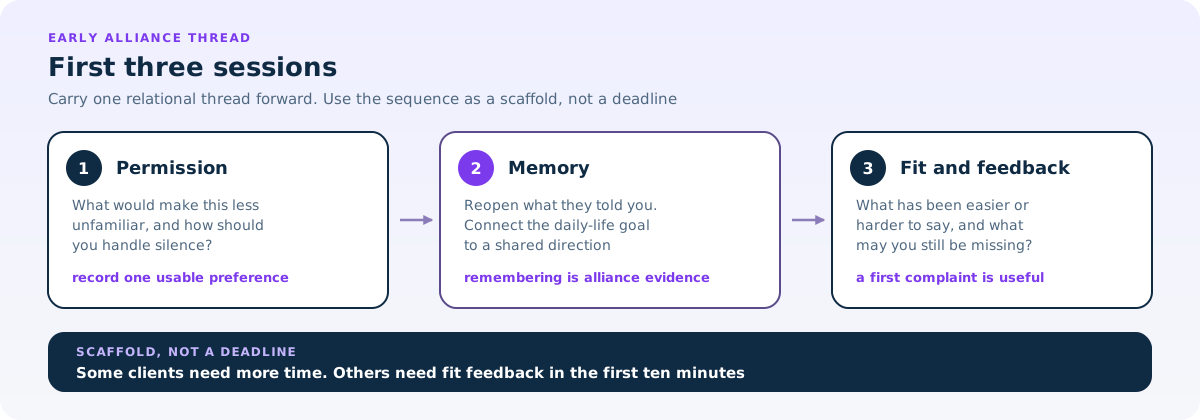
The first three sessions do not need three different lists. They need a relational thread you can carry forward.
Scroll the visual sideways to view the full diagram
Session one: permission and usable preferences
Ask what would make the conversation less unfamiliar, what the client wants understood before you begin, and how they want you to respond to silence or uncertainty. End by checking one concrete feature of the hour: “Was the amount of structure about right?”
Record the preference you intend to act on. Do not document speculative meanings about guardedness or trust.
Session two: memory and collaboration
Reopen what the client told you. “Last time you said it helps when I explain why I’m asking something. Did I do that well enough today?” Then connect the client’s daily-life goal to a shared treatment direction.
Remembering is alliance evidence. It shows that the first answer did not disappear when the session ended.
Session three: fit and feedback
By now the client has enough experience to comment on your pace, language, and assumptions. Ask what has been easier or harder to say, whether the current focus fits, and what you may still be missing about identity, context, or previous care.
Do not force a positive verdict. A useful third session may produce the first complaint. If that complaint changes how you work, it becomes continuity rather than a one-time feedback exercise.
Use the sequence as a scaffold, not a deadline. Some clients need more time before direct alliance feedback. Others need it in the first ten minutes because earlier care taught them that unspoken differences become unsafe.
Therapy Questions Practice Pack and clinician-use boundary
The shared Therapy Questions Practice Pack turns these decisions into a three-page planning and supervision tool. It includes a purpose selector, question-form choice grid, six-check calibration, rewrite worksheet, timing and state checks, repair stems, and an audit for recurring habits.
Use it before a difficult session, after a question missed, or in supervision. Do not complete it in front of the client as a scorecard for their openness. The pack supports therapist reflection; it does not measure rapport or replace an alliance measure.
Free PDF: Therapy Questions Practice Pack
A printable three-page clinician pack for calibrating open, closed, reflective, scaling, and clarifying questions before and after you ask them.
- Purpose selector and open/closed choice grid
- Six-check calibration and rewrite worksheet
- Timing and state checks with repair stems
- Supervision audit for recurring question habits
Free. We'll email the PDF link right away and add you to the therapist toolkit, sent every two weeks. Unsubscribe any time.
Where should we send the link?
We'll email the PDF link right away. You'll also get the therapist toolkit every two weeks. Unsubscribe any time.
✓ Check your inbox
We've sent you the PDF
The download link is on its way to your inbox, usually within a minute or two. The email will come from Emosapien (hello@team.emosapien.com); check your spam folder if you don't see it.
You're also on the therapist toolkit list, sent every two weeks. Unsubscribe any time from the email footer.
When feedback or repair changes the plan, document the clinically relevant thread: what you observed, the intervention or question you used, the client’s response, any risk information, and what you will revisit. The clinical documentation hub keeps that record focused without turning the note into a transcript of intimate disclosures.
Emosapien can carry client preferences, session themes, between-session check-ins, and draft notes across the treatment workflow. You still decide what a response means, what belongs in the record, and what requires direct assessment. Every note remains under clinician review.
Start free with Emosapien when you want the client’s relational thread available before the next session without giving up clinical judgment.
The best rapport question is rarely the most intimate one. It is the one the client can answer honestly, decline safely, and see you remember.
References
- Flückiger, C., Del Re, A. C., Wampold, B. E., & Horvath, A. O. (2018). The alliance in adult psychotherapy: A meta-analytic synthesis. Psychotherapy, 55(4), 316–340.
- Eubanks, C. F., Muran, J. C., & Safran, J. D. (2018). Alliance rupture repair: A meta-analysis. Psychotherapy, 55(4), 508–519.
- American Psychological Association. (2017). Multicultural Guidelines: An Ecological Approach to Context, Identity, and Intersectionality.
- The Columbia Lighthouse Project. About the Columbia Suicide Severity Rating Scale.
- Tian, X., Lubold, N., Friedman, L., & Walker, E. (2020). Understanding rapport over multiple sessions with a social, teachable robot. Artificial Intelligence in Education, 12164, 318.