Emosapien

Vendor comparison for therapists

Blueprint vs Mentalyc for therapists

Choose Blueprint if you want AI assistance plus assessments, assignments, and EHR or practice consolidation. Choose Mentalyc if you want flexible AI therapy notes and treatment-plan templates beside your current EHR. If you need therapy-only co-therapy across the session and the week, compare Emosapien next.

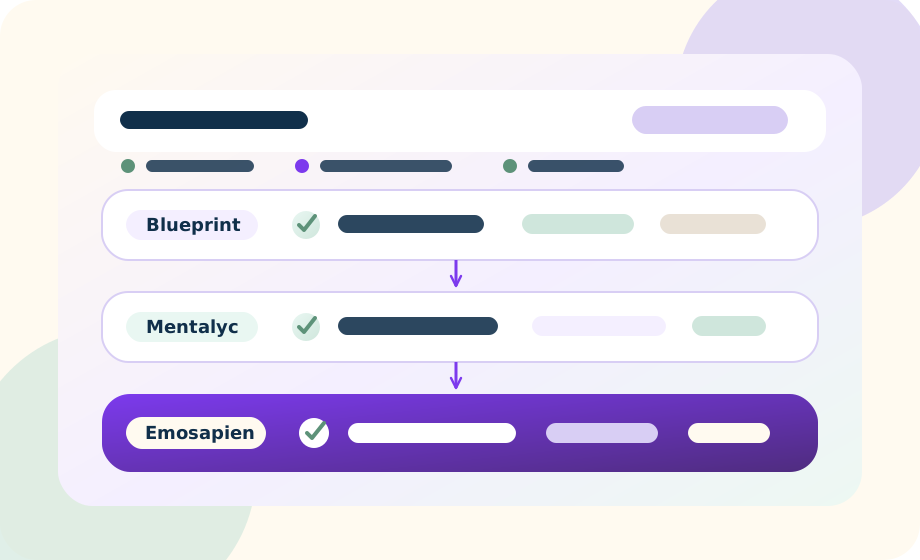
Decision lanes comparing Blueprint assessment support, Mentalyc note drafting, and Emosapien continuity across sessions

Therapists comparing both vendors need a clear buying answer. A Blueprint vs Mentalyc decision usually turns on assessments and practice consolidation versus flexible notes beside the EHR you already run.

Blueprint centers an AI assistant with documentation, treatment plans, assessments, assignments, and organization support. Mentalyc centers AI therapy notes, treatment-plan output, and templates that work with every EHR. Emosapien enters only after that tradeoff is clear.

Quick verdict

Three clear picks, not one forced winner

Blueprint works best when assessments and operations sit at the center. Mentalyc works best when flexible notes and templates beside your EHR are the main job. Emosapien is the next comparison when you want therapy workflow continuity across sessions.

Choose Blueprint if

You want AI assistance plus assessments and EHR consolidation

Blueprint fits clinicians who want AI documentation, treatment plans, assignments, assessments, and clinical support around an existing EHR or as a consolidated stack for the organization.

Choose Mentalyc if

You want flexible AI therapy notes beside your current EHR

Mentalyc fits clinicians who want AI therapy notes, treatment-plan output, and broad templates while keeping their current EHR and practice operations stack.

Compare Emosapien if

You want therapy-only co-therapy across the week

Emosapien drafts modality-aware notes, keeps optional in-session prompts therapist-controlled, carries treatment goals forward, and runs between-session check-ins, homework, journaling, and measures in one therapy workflow.

Feature table

Blueprint vs Mentalyc side by side

Blueprint and Mentalyc differ most on assessments-plus-ops versus notes-plus-templates. The table below shows where each product is stronger.

Core product job
What the platform is built to do day to day
Blueprint

AI assistant with documentation, plans, assessments, assignments, and EHR support

Mentalyc

AI therapy notes, treatment plans, and templates that work with your current EHR

AI progress notes
Structured therapy note drafting from session work
Blueprint

AI-drafted session notes and summaries for mental-health clinicians

Mentalyc

Flexible AI therapy notes with broad note templates for private practice

Note formats and templates
SOAP, DAP, BIRP, and related clinical note structures
Blueprint

Custom templates and documentation support on public plans

Mentalyc

SOAP, DAP, BIRP, GIRP, PIE, PIRP, SIRP, group notes, and 100+ custom templates on higher plans

Treatment plans
Plan drafting and plan-aware clinical support
Blueprint

Treatment plans with clinical support around care

Mentalyc

Treatment-plan output and treatment-plan-referenced notes

Assessments and outcomes
Outcome measures and score tracking over time
Blueprint

Assessment delivery, worksheets, and outcome tracking as a core strength

Mentalyc

Assessments, progress tracking, session insights, and alliance scoring

In-session support
Live help while the appointment is running
Blueprint

Clinical support around documentation and care decisions

Mentalyc

Session capture and insights for documentation rather than live co-therapy prompts

Between-session work
Client assignments, homework, and follow-through after the visit
Blueprint

Assignments, worksheets, and assessment workflows between visits

Mentalyc

Progress tracking and insights after the visit; less of a full engagement layer

EHR and practice ops
Current EHR fit vs consolidating records, billing, and scheduling
Blueprint

Use with your current EHR or Blueprint AI-assisted EHR with billing and scheduling

Mentalyc

Works with every EHR posture for clinicians who want to keep their current system

Pricing posture
How clinicians try and pay for the product
Blueprint

Published plan structure with free-session and free-EHR positioning on public pages

Mentalyc

14-day free trial with plan tiers around templates, notes, and treatment-plan features

Trust and compliance
Security and covered-entity posture claims
Blueprint

HIPAA-oriented AI chat and documentation claims on public trust pages

Mentalyc

BAA and HIPAA agreement claims on public pricing and trust pages

Vendor facts are based on public US pages checked July 2026. Functionality and terms can change after publication.

Workflow feel

Before, during, and after the session

Fit often shows up in the rhythm of the day, not in a single feature checkbox.

Before the session

Prep, intake, and what arrives first

Blueprint

Blueprint centers assessment prep, assignments, and plan context so the clinician opens the visit with scores and task status already in view.

Mentalyc

Mentalyc centers note and plan context from prior sessions so the clinician can start documentation work from recent therapy language.

Emosapien

Emosapien carries goals, homework, journaling, check-ins, and measure trends into a pre-session brief tied to the active treatment plan.

During the session

Capture, support, and note draft

Blueprint

Blueprint supports documentation and clinical decision work around the visit rather than acting as a modality-aligned co-therapy layer.

Mentalyc

Mentalyc captures session content for AI note drafting and session insights while the clinician stays focused on the client.

Emosapien

Emosapien keeps optional CBT, ACT, and DBT prompts therapist-controlled while the Scribe Agent drafts SOAP, DAP, BIRP, GIRP, or PIE notes from session context.

After the session

Sign-off, plans, measures, and follow-through

Blueprint

Blueprint updates documentation and plans, sends assignments, and tracks assessments so the organization can monitor outcomes after the visit.

Mentalyc

Mentalyc finishes notes and treatment-plan output, then hands chart work back to the clinician and their existing EHR.

Emosapien

Emosapien finalizes clinician-reviewed notes, updates treatment-plan continuity, and runs between-session engagement plus outcome measures into the next appointment.

Practice fit

Which setup matches your practice

Use the practice shape below if the scorecard still leaves the call open.

Solo therapist with an existing EHR

Mentalyc is often the cleaner fit when you want AI notes and treatment-plan templates without replacing scheduling, billing, or the chart. Blueprint still works with a current EHR, but its all-in-one posture can pull you toward consolidation sooner.

Group practice wanting outcomes and ops in one stack

Blueprint is usually stronger when assessments, assignments, organization support, and EHR or billing consolidation sit at the center of the buy. Mentalyc can still draft notes for the team, but it stays documentation-first beside the record.

Clinician prioritizing note formats

Mentalyc leads when you need broad therapy templates such as SOAP, DAP, BIRP, GIRP, PIE, and custom formats. Blueprint also drafts documentation, but its center of gravity is plans, assessments, and clinical support.

Practice wanting in-session and between-session continuity

Emosapien fits when notes are not enough. You want optional in-session prompts, treatment-plan continuity, homework, check-ins, journaling, and measures tied to the next visit in one therapy workflow.

Blueprint edge

Where Blueprint is the stronger fit

  • Blueprint is stronger when assessments, assignments, and organization-wide clinical support sit at the center.
  • Blueprint fits teams that want AI documentation and treatment plans around an existing or consolidating EHR.
  • Blueprint free-EHR and free-session positioning can matter for practices ready to reduce tool sprawl.

Mentalyc edge

Where Mentalyc is the stronger fit

  • Mentalyc is stronger when flexible AI therapy notes and broad templates are the main job.
  • Mentalyc fits clinicians who want treatment-plan output while keeping their current EHR.
  • Mentalyc template breadth helps practices that need many note formats without changing practice ops.

After the vendor shortlist

Where Emosapien fits after this comparison

After you settle this vendor tradeoff, Emosapien is the therapy-only co-therapy layer if you want notes, optional in-session prompts, homework, and measures in one workflow.

  • Emosapien drafts therapy notes from session context and keeps sign-off with the licensed clinician.
  • Emosapien surfaces optional modality-aligned prompts only when the therapist wants them.
  • Emosapien connects treatment-plan goals, homework, journaling, check-ins, and PHQ-9, GAD-7, ORS, and related measures to the next visit.
  • Emosapien includes an ongoing free tier with 10 AI-generated sessions per month and no credit card.

Start with the AI clinical notes workflow, then read between-session engagement, and use the scored head-to-heads for Emosapien vs Blueprint and Emosapien vs Mentalyc if one vendor is already in your stack. When all three brands are still open, compare Blueprint, Mentalyc and Upheal together.

Frequently asked questions

Neither wins for every practice. Choose Blueprint when AI assistance, assessments, assignments, and EHR or practice consolidation matter most. Choose Mentalyc when flexible AI therapy notes, treatment plans, and templates beside your current EHR matter most. If you want therapy-only co-therapy across the session and the week, evaluate Emosapien next.

Both draft AI documentation for mental-health clinicians. Mentalyc leads for therapists who want broad note templates and treatment-plan-referenced notes next to an existing EHR. Blueprint leads when notes sit beside assessments, assignments, treatment plans, and clinical support for the team.

Blueprint is usually the stronger pick when assessments, assignments, and outcome tracking drive the buying decision. Mentalyc also offers assessments, progress tracking, and alliance scoring, but its center of gravity is documentation. Emosapien schedules and scores PHQ-9, GAD-7, ORS, and related measures against treatment-plan goals inside the wider therapy workflow.

Mentalyc is the clearer keep-your-EHR path. Blueprint can also sit beside a current EHR, and it can consolidate into Blueprint AI-assisted EHR, billing, and scheduling when the practice is ready. Confirm the workflow you want before you switch tools.

No. Blueprint and Mentalyc both support documentation and clinical workflow, but the licensed clinician still reviews notes, plans, risk wording, and care decisions. Emosapien keeps the same rule: the therapist owns every note and every prompt.

Settle the vendor tradeoff first. Then compare Emosapien when you want a therapy-only layer: modality-aware notes, optional in-session co-therapy, treatment-plan continuity, between-session engagement, and measurement in one workflow.

Yes. Emosapien keeps a permanent free tier at 10 AI-generated sessions per month with no credit card, so you can review real notes, goals, measures, and between-session work before you buy. Confirm current Blueprint and Mentalyc trial terms on their public pricing pages.

Try the therapy-only workflow free

Start free with 10 AI-generated sessions per month, no credit card, no countdown. Review notes, goals, measures, and between-session work on real sessions before you switch tools.