
Free Trauma Worksheets for Adults

Outline
Authored by Amara Collins, clinical psychologist trained in attachment-informed and trauma-aware care, with a focus on holding the story across no-shows, waitlists, and long gaps between sessions.
The client leaves with a trauma sheet that asked for a story. Next week the page is blank, or filled past the stop, or still in the bag after a missed hour.
That return is the work. Free trauma worksheets for adults belong in outpatient talk therapy as a short stabilization pack a licensed therapist assigns and reopens, not as a workbook a client finds and runs alone. The job is to hold a thin thread across a gap, a waitlist stretch, or a no-show without sending someone into processing without you. If the indicated work is a gaze-based processing hour rather than a stabilization sheet, use brainspotting basics for therapists and keep this pack on consent, pacing, and stop rules. If the indicated work is phased EMDR rather than a stabilization sheet, start with EMDR basics for phased reprocessing.
Walk through a consent and pacing card, a resource and stop-rule sheet, and a clinician review card in session before the paper leaves. Use the download when you want the same cards on paper.
Email me the printable trauma worksheet pack
Get the consent and pacing card, resource and stop-rule sheet, and clinician review card.
- Consent and pacing card with purpose, keep-outs, pause language, and reopen plan
- Resource and stop-rule sheet: one support, one early cue, one stop condition
- Clinician review card for complete, mixed, or blank work and when to pause the pack
Free. We'll email the PDF link right away and add you to the therapist toolkit, sent every two weeks. Unsubscribe any time.
Where should we send the link?
We'll email the PDF link right away. You'll also get the therapist toolkit every two weeks. Unsubscribe any time.
✓ Check your inbox
We've sent you the PDF
The download link is on its way to your inbox, usually within a minute or two. The email will come from Emosapien (hello@team.emosapien.com); check your spam folder if you don't see it.
You're also on the therapist toolkit list, sent every two weeks. Unsubscribe any time from the email footer.
Educational content for licensed therapists, not clinical, legal, or emergency advice. Sheet selection sits inside formulation, consent, risk, culture, and setting. These pages are not a diagnosis, not a trauma treatment, not a crisis service, and not unsupervised processing.
What this pack is and is not
This is a continuity aid. It holds one agreed stabilization task across fragmented weeks. It does not ask the client to narrate trauma at home, map parts, walk a timeline, or prove they did the work.
The wider library of therapy worksheets in clinical practice covers choosing forms by clinical task. Use free trauma worksheets for adults when the job is consent, pacing, one stop rule, and a next-session reopen.
| This pack is | This pack is not |
|---|---|
| Therapist-assigned stabilization sheets | A consumer self-help trauma workbook |
| Consent, pause language, and a reopen plan | Unsupervised processing, exposure, or a timeline |
| One support, one early cue, one stop | A grounding-skill drill or window-of-tolerance map |
| Complete, mixed, or blank as information | A symptom checklist, diagnosis, or safety plan |
If this week is about choosing which between-session trauma activity fits, hand that selector to between session activities trauma work. If the hour is for rehearsing one present-orientation skill, hand that to a grounding techniques worksheet. Keep window-of-tolerance maps, trauma-informed stance refreshers, and EMDR target forms with those dedicated tools. When the take-home is one present-day writing stem rather than a stabilization sheet, assign journaling for childhood trauma.
School and IEP trauma forms, crisis-replacement safety plans, and dual-audience “personal healing” packets are out of scope.
When these sheets hold the week
These free trauma worksheets for adults fit after the client can notice an early cue, use the agreed stop, and pause without a clinician present, and after you can say in plain language what the page is not for.
They are useful across a gap, a wait, or a missed hour when the thread needs a small, non-punitive reopen. One finished consent card beats a packet that never comes back. One honest stop is more useful than a completed page that pushed past the window.
Agree on a purpose before the page leaves. “Notice one early cue and use the stop we practiced, and we will start there next time” is a purpose. “Work on your trauma this week” is not.
The assignment is optional in the sense that refusal, shrinkage, or a blank return still belongs in the next hour. Completion is not proof of alliance. A blank sheet is not proof of resistance. Forcing the worksheet is a rupture. Name it if last week’s review felt like a grade.
SAMHSA’s trauma-informed principles put safety, trustworthiness, and choice ahead of any handout. ISTSS treatment guidelines synthesize the clinical research and assist clinicians who already provide prevention and treatment for PTSD and Complex PTSD. This pack does not become that treatment because it is printable.
When to pause the pack
Pause the sheets when the prompt would cost the alliance, flood the week, or stand in for care that belongs in the room.
Stop, shrink, or switch tasks when:
- Acute risk is active. Route the hour to assessment plus the indicated consultation, disposition, safety-planning, higher-care, or emergency pathway. A homework pack does not sit on top of that.
- Dissociation or flooding exceeds the home frame. Bring the work back into session. Do not add a longer sheet.
- The indicated work is a protocol. EMDR target development, Cognitive Processing Therapy (CPT), and Prolonged Exposure (PE) remain within the clinician’s training and scope. Parts mapping is not a parallel manualized protocol; it stays with the competence and formulation that already hold that work.
- Home is not private or safe enough to leave a written sheet lying around.
- Last week’s sheet felt forced. Repair the rupture before you hand another page.
- The client starts processing trauma material alone. Stop the pack. That is information, not extra credit.
Do not use these sheets as remote risk monitoring or as a substitute for higher care.
What the pack contains
Walk through the consent card in session before it goes home, using the same fields the client will see. Do not send processing prompts home. Keep free trauma worksheets for adults in stabilization: consent, one stop, and a review.
Scroll the visual sideways to view the full diagram
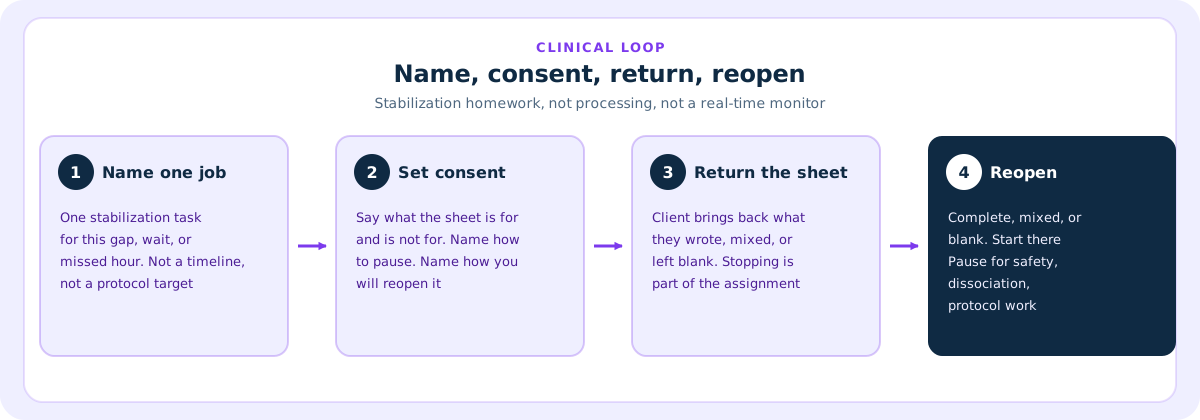
1. Consent and pacing card
What this week’s sheet is for, what it is not for, how the client can pause, and how you will reopen it.
Fields. Purpose in one sentence. What this is not (not a timeline, not processing, not a crisis line). Pause language in the client’s words. When you will look at the page together.
Introduce. “This page holds one small task until we meet. You can stop it. We will start with whatever came back, including a blank page.”
Standard 10.01 of the APA Ethics Code applies to psychologists and requires informed consent about the nature and anticipated course of therapy, the involvement of third parties, and the limits of confidentiality. Apply that same clarity to the worksheet: say what the sheet is for, when you will read it, and that it is not monitored between sessions.
Stop. The card becomes a demand to finish. The client is praised only for a full page. Pause language is missing.
2. Resource and stop-rule sheet
One support, one early cue, one stop condition. Not a grounding-technique drill and not a window-of-tolerance map.
Fields. One already-practiced support (person, place, object, or contact). One early cue the client can notice. One stop condition in their words. What they will do after they stop.
Introduce. “We are naming one way to pause, not a skill to drill until it works.”
Stop. The sheet turns into a body-scan sequence, an arousal graph, or a list of ten coping tools. Hand the client back to a grounding drill or a window-of-tolerance map instead of expanding this sheet.
3. Clinician review card
Complete, mixed, or blank. Next-session reopen language. When to pause the pack for safety, dissociation, or protocol work.
Fields. Return state. First question you will ask. Whether to repeat, shrink, or stop. Documentation stem for the signal, not a transcript.
Introduce to yourself. “Whatever returned is the start of the hour. Do not grade it.”
Stop. The review becomes a compliance check. Blank work is charted as resistance without asking what happened around the form.
Reopen complete, mixed, or blank sheets
Name the sheet at the start of the next hour. The review is part of the intervention. A page that never comes back into the room taught both of you that the assignment was theater.
| Return state | First clinical move |
|---|---|
| Complete | Ask what the page missed, and whether the stop was usable |
| Mixed | Find which field fit and which one cost too much |
| Stopped early | Thank the stop. Treat it as skill, not failure |
| Blank | Ask what happened around the form before you interpret motivation |
| Over-filled | Name the push past the frame. Repair if the sheet felt forced |
A useful reopen is specific: “You named the kitchen doorway as a cue and left the support line blank. Where should we begin?” If the client wants a different starting point, follow that.
Blank work can mean the prompt was too large, the home was not private, last week’s review felt like a grade, or the pain needed the whole hour. None of those possibilities should be scored from the page.
Privacy, documentation, and safety
Agree on delivery and storage before anyone writes private material.
Delivery. Paper, a portal the practice already uses, or complete it together in session. Do not send clinical content through ordinary consumer email or SMS.
Storage. The working copy may stay with the client or enter the file under practice policy. Portal copies belong in the approved record system. Do not leave a sheet where an unsafe household can read it.
Documentation. Record the clinically relevant signal, the intervention, the client’s response, and the next step. Do not paste the sheet verbatim into the note unless there is a specific clinical reason.
A concise entry might read:
Reviewed between-session trauma stabilization sheet. Client used the stop line after an early cue at the kitchen doorway and left the support field blank, stating the house was not private. Explored how the blank field related to last week’s missed session. Agreed to keep the stop rule and complete the support line together in session.
Safety boundaries. This sheet is not a diagnosis, not a trauma treatment, not a crisis service, not monitored in real time, and not unsupervised processing. If the client needs urgent support, they use the crisis path you already set.
If risk language, marked deterioration, or a safety concern appears, leave worksheet mode. Follow the practice’s risk, consultation, and emergency procedures.
How Emosapien carries the thread
Emosapien keeps the agreed between-session sheet visible for the next appointment so you can reopen what was actually assigned. You choose the sheet, the cadence, and the stop rule. Emosapien does not pick the prompt, process trauma material, monitor crisis risk, or contact emergency services.
See how that layer supports client engagement between sessions while clinical judgment stays with you.
Download the pack
Download free trauma worksheets for adults as three US Letter pages with selectable text:
- Consent and pacing card
- Resource and stop-rule sheet
- Clinician review card: complete, mixed, or blank; reopen language; when to pause for safety, dissociation, or protocol work
Assign one job at a time. Walk through the consent card before the page leaves the room.
Email me the printable trauma worksheet pack
Get the consent and pacing card, resource and stop-rule sheet, and clinician review card.
- Consent and pacing card with purpose, keep-outs, pause language, and reopen plan
- Resource and stop-rule sheet: one support, one early cue, one stop condition
- Clinician review card for complete, mixed, or blank work and when to pause the pack
Free. We'll email the PDF link right away and add you to the therapist toolkit, sent every two weeks. Unsubscribe any time.
Where should we send the link?
We'll email the PDF link right away. You'll also get the therapist toolkit every two weeks. Unsubscribe any time.
✓ Check your inbox
We've sent you the PDF
The download link is on its way to your inbox, usually within a minute or two. The email will come from Emosapien (hello@team.emosapien.com); check your spam folder if you don't see it.
You're also on the therapist toolkit list, sent every two weeks. Unsubscribe any time from the email footer.
References
- Substance Abuse and Mental Health Services Administration. (2014). SAMHSA’s Concept of Trauma and Guidance for a Trauma-Informed Approach. HHS Publication No. (SMA) 14-4884.
- International Society for Traumatic Stress Studies. ISTSS Prevention and Treatment Guidelines.
- American Psychological Association. Ethical Principles of Psychologists and Code of Conduct.