
Relapse Prevention Group Activities for SUD and IOP

Outline
Priya once watched a skilled IOP facilitator open a “relapse prevention” hour with three worksheets stacked on the table. Members filled boxes. Nobody practiced an interruption. Two people were three days post-detox, one was back after a lapse and scanning for judgment, and the longest-sober member turned every prompt into a bottom story that closed the room.
The miss was not missing content. The miss was protocol fit. The hour asked for disclosure before the room had a shared sequence, and it treated the worksheet as proof of work instead of a scaffold for one interruption the member could still use after group.
Relapse prevention group activities earn their place when they do one job after the theme is already chosen: map early drift, break a cue chain, rehearse one high-risk exit, ride a mild urge, write an if-then plan, build a support ladder, learn from a lapse without shame theater, or lock the next 72 hours.
Therapists can use these relapse prevention group activities to run one print-ready protocol, protect the most fragile member, and leave each chart with a concrete next step instead of a pile of unfinished worksheets.
Free PDF: Recovery Group Pack
A printable facilitator pack for recovery group activities: stage-and-cohesion checklist, 12-activity menu by session phase, and primary-plus-backup planner.
- Stage and cohesion decision checklist before you pick an activity
- 12 recovery group activities across opening, craving/trigger work, skills and repair, and closing
- Primary activity plus backup planner for activated rooms
- After-group note stems for intervention, response, risk, and next step
Free. We'll email the PDF link right away. We may also send the occasional therapist toolkit. Unsubscribe any time.
Where should we send the link?
We'll email the PDF link right away. You'll also get the occasional therapist toolkit. Unsubscribe any time.
✓ Check your inbox
We've sent you the PDF
The download link is on its way to your inbox, usually within a minute or two. The email will come from Emosapien (hello@team.emosapien.com); check your spam folder if you don't see it.
You're also on the weekly therapist toolkit list. Unsubscribe any time from the email footer.
Educational resource for licensed mental-health clinicians facilitating substance-use, recovery, and IOP groups. Exercises support treatment. They do not replace individualized assessment, withdrawal or acute-risk protocols, medical coordination, crisis response, or clinical judgment.
Choose topic first, then one protocol
This page owns the handout and facilitator steps after you have already locked the hour’s theme. Start with relapse prevention group topics when you still need the clinical job of the hour. For broader recovery menus across opening, skills, and close, use recovery group activities. For the wider facilitation frame, open the group therapy resources for clinicians hub.
SAMHSA’s TIP 41 on Substance Abuse Treatment: Group Therapy keeps group work tied to structure, cohesion, and active facilitation. NIDA’s Principles of Drug Addiction Treatment keeps care responsive to the person in front of you, not to a fixed curriculum page. SAMHSA’s TIP 35 on Enhancing Motivation for Change in Substance Use Disorder Treatment supports stage-aware language when members are ambivalent, early, or returning after a lapse.
Before you pick a protocol, answer four questions on paper:
- What recovery stage is most fragile among attending members?
- What is the current relapse risk in the room today?
- Does the group have enough cohesion for disclosure, or only enough for shared skills?
- Is the session opening, deepening, or closing, and how many minutes remain for processing?
When the room still needs shared language about risk before a relapse-prevention protocol, use activities for drugs and alcohol awareness rather than matching a recovery-stage task. When the hour needs a lower-stakes adult recovery task rather than a relapse protocol, use fun substance abuse group activities for adults.
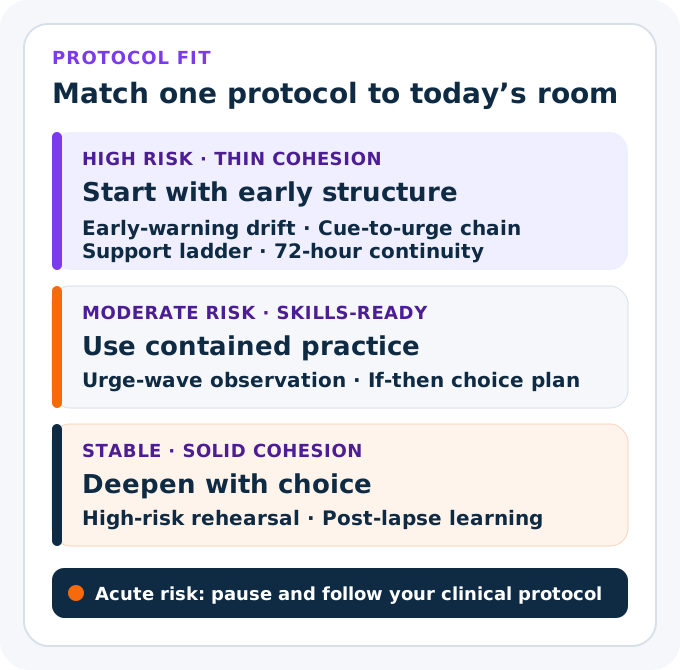
If risk is high and cohesion is thin, stay with early-warning, cue-chain, support ladder, or 72-hour continuity work. If cohesion is solid and members are stable, the room can hold high-risk rehearsal or post-lapse learning without turning pain into performance.
Eight print-ready protocols
Use this bank of relapse prevention group activities as facilitator protocols, not as a curriculum sprint. One core exercise per hour is enough. Each protocol below carries purpose, fit, timing, steps, handout fields, pass language, open-group adaptation, debrief prompts, and a documentation cue.
1. Early-warning drift map
Purpose and best-fit room. Name body, routine, isolation, sleep, and skipped-support cues before the substance returns. Best for early recovery, high-risk IOP, and rooms that arrive activated without shared language.
Time and materials. 15 to 20 minutes. One printed map per member, pens, optional wall board for shared categories only.
Facilitator steps.
- State the job: “We are mapping early drift, not telling use stories.”
- Restate the pass option and the no-advice rule.
- Give two minutes of private writing across five cue lanes: body, routine, isolation, sleep, skipped support.
- Invite optional one-lane shares. Stop war-story escalation.
- Close by having each member star one personal early cue and one interruption that fits that cue.
Handout fields. Date; my early cue this week; body sign; routine change; isolation pattern; sleep change; support I skipped; interruption I can try first; who knows this plan.
Pass language. “You can keep the whole map private. A pass may mean safety, shame, fatigue, or wise pacing.”
Open or mixed-stage adaptation. Keep categories present-tense and behavioral. Newer members map one lane only. Longer-sober members model short cues, not polished lessons.
Debrief prompts. “Which cue showed up first?” “Where does that cue usually ask you to act?” Avoid “Tell us the last time you relapsed.”
Documentation cue. “Facilitated early-warning drift map; member identified [cue], named [interruption], participation [observe / partial / full].“
2. Cue-to-urge chain
Purpose and best-fit room. Break one sequence into cue, body response, thought, urge, behavior, short-term payoff, and an earlier interruption point. Best for skills groups and CBT-leaning IOP modules.
Time and materials. 15 to 20 minutes. Chain strip or six-column handout.
Facilitator steps.
- Draw or hand out the chain fields.
- Members write one mild, realistic chain from this week, not a dramatic bottom.
- In pairs or whole group, choose one row and ask where an earlier interruption could land.
- Members rewrite the interruption in their own language.
- Collect only what members choose to share; keep charts specific to participation.
Handout fields. Cue; body response; thought; urge; behavior; short-term payoff; earlier interruption; support contact if the chain accelerates.
Pass language. “Write the chain even if you do not share it. You can pass on any column that feels too hot today.”
Open or mixed-stage adaptation. Use a group example first with invented or composite details, then private member chains. Do not require matching histories.
Debrief prompts. “Where could the chain have bent earlier?” “What would that earlier move sound like in your words?”
Documentation cue. “Facilitated cue-to-urge chain; member located interruption at [point], response [calm / activated / shut down].“
3. High-risk situation rehearsal
Purpose and best-fit room. Rehearse one realistic scenario, one refusal or exit line, and one support action. Best for social pressure, payday, or people-and-places themes when cohesion can hold brief role-play.
Time and materials. 15 minutes. Scenario card, refusal line box, support action box.
Facilitator steps.
- Members pick one upcoming risk window, not a historical disaster.
- Write the scene in three lines: who, where, what pressure shows up.
- Draft one refusal or exit sentence that sounds like the member.
- Pair-rehearse once. Coach tone and length, not performance.
- Name the support action after the exit, then stop. No second scenario.
Handout fields. Upcoming risk window; people or place; pressure line I expect; my refusal or exit sentence; body cue that means leave now; support action after I exit; who I will tell I used the plan.
Pass language. “You can write without role-play. Role-play is optional and timed.”
Open or mixed-stage adaptation. Offer writing-only track for new or brittle members. Keep rehearsal under two minutes so the room does not crown a performer.
Debrief prompts. “Did the sentence sound like you?” “What is the first body cue that means leave?”
Documentation cue. “High-risk rehearsal; member practiced [exit line], named [support action].“
4. Urge-wave observation card
Purpose and best-fit room. Practice noticing a mild urge through start, peak, change, and support prompts. Best for craving-tolerance hours. Never use acute activation as a demonstration.
Time and materials. 10 to 15 minutes. Observation card, timer, grounding option visible.
Facilitator steps.
- Screen the room. If anyone is in acute craving or withdrawal crisis, do not run this protocol; shift to support ladder or individual follow-up.
- Invite a mild memory, body cue, or low-level urge only.
- Two-minute silent observation with eyes open or soft gaze.
- Members mark start, peak, change, and what the urge asked them to do.
- Close with one grounding or support move before any story share.
Handout fields. Mild cue used; start intensity 0 to 10; peak intensity; what changed by minute two; what the urge asked for; support or grounding used; note for my individual plan.
Pass language. “You can observe breath and posture only. You do not need to summon a craving to belong in this exercise.”
Open or mixed-stage adaptation. Offer a neutral body-scan track for members who should not evoke substance cues. Keep the demonstration mild and facilitator-contained.
Debrief prompts. “What changed without you solving it?” “What did the urge ask for that you did not obey?”
Documentation cue. “Urge-wave observation; member tracked mild cue, peak [n], used [grounding/support]; no acute risk observed / risk follow-up as noted.”
5. If-then choice plan
Purpose and best-fit room. Write implementation intentions for a known risk window in the member’s own language. Best for Friday groups, discharge weeks, and members who already know their pattern.
Time and materials. 10 to 15 minutes. If-then strip with two rows maximum.
Facilitator steps.
- Name one risk window only: after work, payday, lonely evening, family call.
- Members write one if-then pair for the first five minutes of that window.
- Add a second pair only if the first is solid and time remains.
- Check that the “then” is behavioral, possible, and not a slogan.
- Members read one pair aloud optionally, then put the card where they will see it.
Handout fields. Risk window; If ____, then I will ____; backup If ____, then I will ____; where this card will live; who knows this plan.
Pass language. “One pair is enough. You can keep both pairs private.”
Open or mixed-stage adaptation. Supply example stems on the board so newer members are not blank-page stuck. Do not grade creativity.
Debrief prompts. “Is the then-step small enough for a hard day?” “Where will the card actually live?”
Documentation cue. “If-then plan written for [window]; member named [then-step] and placement of plan.”
6. Support ladder
Purpose and best-fit room. Build self-step, peer or support contact, clinician or program contact, and emergency escalation according to the setting’s protocol. Best for thin natural supports, early outpatient, and any room after risk talk.
Time and materials. 15 to 20 minutes. Four-rung ladder handout; program crisis numbers already approved for your setting.
Facilitator steps.
- State the ladder is personal and setting-true. Do not invent contacts the program cannot support.
- Members fill rung one: one self-step that lowers activation without using.
- Rung two: one peer, mutual-help, or recovery contact who can take a real call or text.
- Rung three: clinician, case manager, or program contact and hours.
- Rung four: emergency pathway per your protocol. Review aloud as a group so nobody leaves with a fantasy number.
- Star the rung they will try first this week.
Handout fields. Self-step; peer or support contact and how to reach them; clinician or program contact and hours; emergency pathway per program; first rung I will use this week; barrier that usually stops me; one fix for that barrier.
Pass language. “You can leave a rung blank and finish it in individual care. Blank is better than a false contact.”
Open or mixed-stage adaptation. Provide a printed program contact block so new members are not exposed for not knowing names yet.
Debrief prompts. “Which rung is real on a bad night?” “What usually blocks the first call?”
Documentation cue. “Support ladder completed; first rung [x]; emergency pathway reviewed; follow-up [none / individual / care team].“
7. Post-lapse learning map
Purpose and best-fit room. Sequence and repair after a lapse without shame theater. Use only when stability and cohesion can hold it, and when the member has enough grounding to revisit harm without flooding.
Time and materials. 20 to 25 minutes. Learning map with before-use focus. Risk pathway ready.
Facilitator steps.
- Screen hard. If the member is unstable, newly intoxicated, or the room is brittle, swap to early-warning or support ladder.
- Start before the use: sleep, conflict, isolation, money, old people or places, the thought that made using feel available.
- Separate facts from judgment language on the page.
- Choose one earlier interruption and one repair step that is possible this week.
- Block advice-giving. Reflection only. End with dignity and a follow-up plan, not group verdict.
Handout fields. Facts before the use; body and mood drift; thought that opened the door; what the use solved for a moment; earlier interruption I can see now; one repair that fits reality; support I need; individual follow-up I will keep.
Pass language. “You can map without sharing. No one owes the room a performance of pain.”
Open or mixed-stage adaptation. Offer a “near-lapse or close-call” track so members without a recent lapse are not pressured to invent one, and so the room does not center only the most acute story.
Debrief prompts. “What is one fact without a verdict?” “What repair is possible without waiting for forgiveness?”
Documentation cue. “Post-lapse learning map; member identified earlier interruption [x] and repair [y]; affect [contained / activated]; follow-up [plan].“
8. 72-hour continuity plan
Purpose and best-fit room. Lock the next risk window, one action, one contact, one environmental change, and the next clinical follow-up. Best for Friday groups, discharge weeks, and after any heavy risk hour.
Time and materials. 10 to 15 minutes. 72-hour card.
Facilitator steps.
- Name the next 72 hours as the clinical unit, not “the rest of recovery.”
- Members mark the highest-risk block inside that window.
- Write one action, one contact, one environmental change, and the next clinical touchpoint.
- Keep language concrete: time, place, person, object moved or avoided.
- Close the group only after every attending member has either a card or a documented pass with individual follow-up.
Handout fields. Next 72-hour risk block; one action; one contact; one environmental change; next clinical follow-up; how I will know the plan is working; what I will do if the first step fails.
Pass language. “If you cannot finish the card in group, we schedule the missing piece before you leave.”
Open or mixed-stage adaptation. Use the same four fields for every member so newcomers are not lost in custom worksheets.
Debrief prompts. “What is the first hard block on the calendar?” “Who already knows they are the contact?”
Documentation cue. “72-hour continuity plan; risk block [x]; action [y]; contact [z]; follow-up [date/type].”
Common failure modes
These relapse prevention group activities fail for predictable reasons. Watch for them before the hour starts.
- Asking for a full relapse story before the room has enough safety or cohesion.
- Treating disclosure as participation so quiet members look noncompliant.
- Using games that trivialize risk or reward oversharing.
- Running multiple exercises without processing time.
- Promising that one worksheet prevents relapse.
- Ending without a support and follow-up step, so the parking lot becomes the real group.
When any of those patterns show up, shrink the task. One protocol, one interruption, one support is enough clinical work for most 60-minute rooms.
Individual care still carries the formulation, medication questions, and personal relapse-prevention plan. Pair group practice with the continuity moves in substance use counseling techniques so the individual plan and the group protocol talk to each other.
How to run one protocol in a 60-minute hour
- Open with a brief weather or body check and restate pass language.
- Name the locked topic in one sentence and why it fits today’s risk.
- Run one protocol from this page. Protect writing time before any share.
- Process with two prompts maximum. Block advice.
- Close with the support or follow-up step the protocol already named.
- Document participation and next step per member before the next group starts.
Recovery Group Pack and print-ready handouts
The eight protocols above are print-ready on this page. Copy the handout fields onto your program sheet, or print the section you need for the hour.
The Recovery Group Pack is a separate facilitator planner: stage-and-cohesion checks, a broad 12-activity recovery menu by session phase, primary-plus-backup slots, and after-group note stems. Use the pack to decide whether the room can hold the work and to circle one primary plan plus one backup. Do not expect the pack PDF to contain these eight relapse-specific handout templates.
Do not carry the whole bank into the room as a script. Carry one protocol, one reason it fits, and enough silence for the group to do the work.
These relapse prevention group activities work when members leave with one practiced interruption and one support move, not a longer list of ideas.
Free PDF: Recovery Group Pack
A printable facilitator pack for recovery group activities: stage-and-cohesion checklist, 12-activity menu by session phase, and primary-plus-backup planner.
- Stage and cohesion decision checklist before you pick an activity
- 12 recovery group activities across opening, craving/trigger work, skills and repair, and closing
- Primary activity plus backup planner for activated rooms
- After-group note stems for intervention, response, risk, and next step
Free. We'll email the PDF link right away. We may also send the occasional therapist toolkit. Unsubscribe any time.
Where should we send the link?
We'll email the PDF link right away. You'll also get the occasional therapist toolkit. Unsubscribe any time.
✓ Check your inbox
We've sent you the PDF
The download link is on its way to your inbox, usually within a minute or two. The email will come from Emosapien (hello@team.emosapien.com); check your spam folder if you don't see it.
You're also on the weekly therapist toolkit list. Unsubscribe any time from the email footer.
Where Emosapien fits
A relapse-prevention group asks the therapist to track risk language, peer dynamics, participation, protocol fit, and follow-up at the same time. Emosapien keeps that thread visible without taking the therapist out of the room.
The therapist stays with the group. Emosapien organizes participation notes, risk language, between-session check-ins, and next-session follow-up so the next group starts from continuity instead of guesswork.
Start your journey with Emosapien and keep relapse-prevention group work clinically organized between sessions.