
Group Therapy Notes Examples: From Shared Session to Individual Record

Outline
The same coping-skills hour can leave three different charts. One member rehearses the skill out loud. Another writes privately and passes. A third names a safety concern that has to leave the circle.
Group therapy notes examples are most useful when they hold that split: a concise frame for the session everyone attended, then a record of what each member did, said, practiced, and needs next. Shared context may repeat. Participation, response, progress, risk, and plan should reflect the person whose chart you are completing.
The group therapy progress note examples below use one reusable session frame and distinct member entries. Every sample is fictional, deidentified, and educational. Adapt the structure to your setting, jurisdiction, payer, organization, and clinical judgment. The group therapy resource hub covers facilitation, structure, topics, and activities; this guide starts after the session and stays with the record. Keep presence and absences on a group therapy attendance tracker so the note does not become the roster. A member-specific group note is not a multi-week individual workbook; that assignment artifact lives on therapy workbooks for adults.
What group therapy notes examples can share and what must change
A clean record separates stable session facts from the member-level clinical story. That does not mean every shared field belongs in every charting system. It means the therapist can identify what happened across the room before recording what happened for one person.
| May remain shared when accurate | Must be member-specific |
|---|---|
| Date, duration, group type, topic, facilitator, purpose, and intervention delivered to the whole room | Attendance, observable participation, clinically relevant contribution, response to intervention or peers, progress toward the active goal, risk or safety information when relevant, and plan |
Changing only the member name is not enough. Compare these two entries from the same fictional coping-skills group.
The second entry stays close to observable facts. It does not infer motivation, promise benefit, or label quiet participation as resistance.
Copy-ready two-layer group note template
Use the first layer for the clinical frame. Use the second for each member record. A chart may combine these fields in one note, pull shared fields from a session record, or use a different order. The important part is that the individual layer does real clinical work.
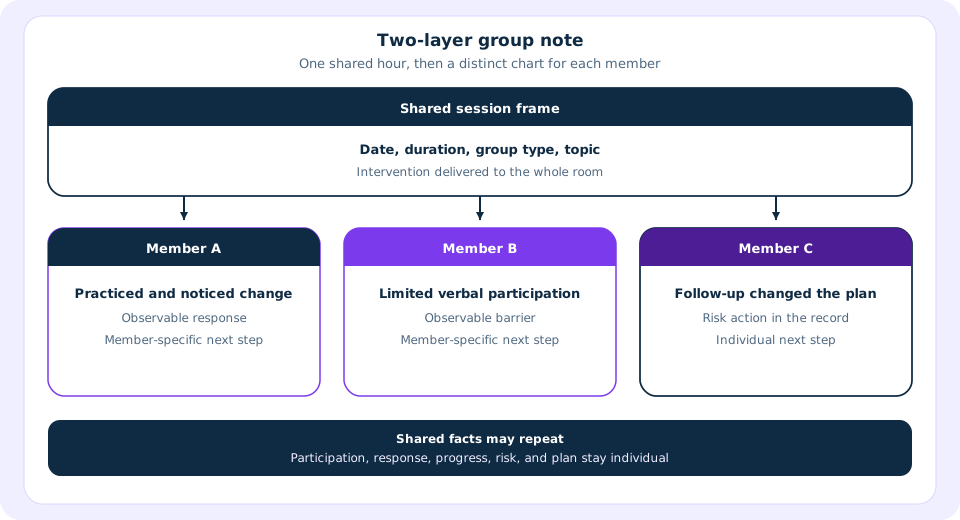
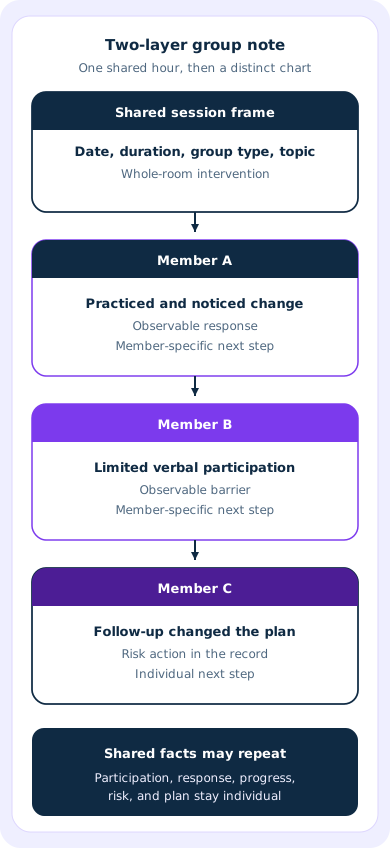
One shared session frame can stay the same. Each member record still needs its own participation, response, progress, risk, and plan.
A field is not complete just because it contains a sentence. “Participated appropriately” hides the information the next clinician needs. Record what participation looked like, what the member did with the intervention, and what belongs in the next contact.
Example 1: one CBT skills group, three member records
The strongest group therapy notes examples hold the intervention steady so the differences between member records become visible. This fictional outpatient group practiced identifying an automatic thought and testing one alternative response.
All three members received the same shared intervention. Their records differ because participation, response, progress, risk material, and follow-up differed.
Example 2: process group with rupture and repair
A process note should describe the exchange without turning an inference about a peer into fact. A member’s chart must not name other members or carry another member’s clinical content. Describe the peer exchange without identifiers. This fictional group worked on receiving feedback while retaining choice.
“Wanted control” or “was attention-seeking” would go beyond what this contact established. The note can document the interruption, the intervention, and the observable repair without diagnosing the interaction.
Example 3: recovery or IOP group
Recovery documentation needs the same individual care. A shared ritual, worksheet, or relapse-prevention topic does not replace member-specific assessment or a program’s crisis procedure. The following samples describe a fictional intensive outpatient relapse-prevention group.
Person-first language keeps the record connected to care. Terms such as “failed,” “noncompliant,” or “addict behavior” add judgment without showing what occurred or what the team did next. SAMHSA’s TIP 41 on Substance Abuse Treatment: Group Therapy provides the wider treatment context for group work in substance-use care.
How the two-layer model fits common note formats
The two-layer model is separate from the headings your organization uses. Keep the shared frame concise, then place individual clinical content where the format expects it.
| Format | Where the shared frame sits | What stays member-specific |
|---|---|---|
| BIRP | Intervention can name the group intervention | Behavior, direct intervention contact, response, and plan |
| GIRP | Intervention can name the group intervention | Active goal, member response, progress or barrier, and plan |
| SOAP | Objective or Assessment may briefly locate the group contact | Subjective report, observation, assessment, risk, and plan |
| DAP | Data may include the shared frame | Member data, clinical assessment, progress, and plan |
Use the full progress note templates and examples guide when you need section-by-section SOAP, DAP, BIRP, GIRP, PIE, or SIRP depth. This page does not duplicate those format libraries.
Common mistakes and repair moves
When group therapy notes examples look polished but interchangeable, they teach the wrong habit. Use these repairs at the point of writing.
| Mistake | Repair |
|---|---|
| Copy the same clinical paragraph into every chart | Keep only accurate session facts shared; rewrite participation, response, progress, risk, and plan from member-level facts |
| Record attendance without clinically relevant session content | Name the intervention contact and what the member did, said, practiced, declined, or responded to |
| Document the planned agenda | Record what actually occurred, including a changed intervention or unfinished task |
| Use labels such as resistant, manipulative, or unmotivated | Describe observable behavior and the context in which it occurred |
| Omit the member’s response | State whether the member practiced, reflected, questioned, declined, changed course, or needed another approach |
| End without continuity | Record the next group task, individual follow-up, consultation, support action, or reassessment |
| Mix private process reflections into the member’s medical record | Keep the progress note limited to clinically relevant chart content. If you maintain psychotherapy notes, they must meet 45 CFR 164.501 and remain separated from the rest of the individual’s medical record |
| Make a coding or payment claim from an example | Verify the actual service, current code source, payer policy, medical necessity, and member record |
The APA’s Record Keeping Guidelines address organization, content, confidentiality, and retention as professional record-keeping considerations. Under the HIPAA Privacy Rule at 45 CFR 164.501, psychotherapy notes are notes recorded by a mental health professional that document or analyze conversation during a counseling session, including a group session, and that are separated from the rest of the individual’s medical record. They remain records. The federal category applies only when that definition is met and the notes stay separate. Session times, modalities, diagnosis, functional status, treatment plan, symptoms, prognosis, and progress belong in the medical record. Neither source creates one universal note template for every license, setting, payer, or jurisdiction.
Documentation examples do not decide billing
An educational note cannot select a code, establish medical necessity, or prove reimbursement. For the service boundary, use the 90853 group psychotherapy code. For diagnosis support, member-level documentation, and claim checks, use the group therapy ICD-10 CPT billing crosswalk.
Keep the boundary short and practical. The sample shows how to distinguish records. The current code set, payer policy, credential, authorization, service delivered, and actual chart determine the billing path.
Use the free group notes generator
Once the shared-versus-individual split is clear, the browser-based tool gives you a place to draft the session frame and member-specific record, then Print or Export the result. Review, correct, and sign the note before it enters the chart. The tool does not replace your risk process, clinical judgment, payer check, or system of record.
Draft the shared frame, then complete each member record
Open the free group notes generatorFrequently asked questions
What should a group therapy progress note include?
Useful group therapy notes examples include a concise shared purpose and intervention, followed by member-specific attendance, observable participation, contribution, response, progress or barrier, relevant risk information, and plan. Follow the requirements of your setting, jurisdiction, payer, and organization.
Can a therapist use one note for the whole group?
A shared frame can reduce repetition, but it does not replace each member’s clinical record. If one paragraph stays true when you change the name, it probably does not show enough about that member’s contact.
What can stay the same across group-member notes?
Accurate facts such as date, duration, group type, topic, facilitator, purpose, and a whole-group intervention may stay the same. Individual participation, response, progress, risk, and next step should change when the facts change.
How are group therapy notes different from individual therapy notes?
A group note locates one person’s care inside a shared clinical event. An individual note describes one client encounter without that shared-room layer. Both still need clinically relevant observation, response, judgment, and continuity.
Which note format works for group therapy: SOAP, DAP, BIRP, or GIRP?
Any of these formats can work when it preserves the shared frame and member-specific content. Use the format required by your organization or payer, and keep the individual response and plan visible.
Does a group note example prove CPT 90853 requirements?
No. A fictional example does not select a code, establish medical necessity, or prove reimbursement. Check current code descriptors, payer policy, credentialing, and documentation rules for the actual service.